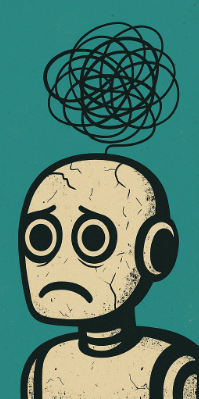
For the past two weeks I’ve been blogging about the importance of personalizing your AI. Last week I wrote how to accomplish that with ChatGPT. Even if you only have a free version, it’s important for you to customize. I also strongly encourage you to have a free account with all of the AIs so you can check their work as some are stronger in one area than another.
Here’s how to personalize with
CLAUDE:
Click on the lower left circle that is your profile icon. Select Settings. Click General. In the box, tell Claude your instructions to use every single time you being a chat.
GEMINI:
Click on the lower left profile icon. Then click on the right setting icon for new pop up window seen above, look for Personal Intelligence. Next click Instructions for Gemini. Insert your instructions in the box.
PERPLEXITY:
Like, ChatGPT and Claude, click on the lower left profile icon then click Account. Next click Personalization. Complete the information under Custom Instructions
Now you’ve saved yourself from having to retype the same instructions repeatedly. Remember, if you provide a conflict in an instruction in the chat box from what you’ve written under personalization, no worries! The prompt box will override what you have in personalization. If you do find yourself having to give the AI repeated instructions, then go back to the personalization setting and update. Happy Researching!
How a quiet English lineage turned into a political scandal and what it taught me about truth, technology, and trust.
AI Image
I use AI almost daily and have written and presented on it for nearly two years. But a recent experience left me completely baffled and more than a little uneasy.
I’ve been working on my final family genealogy book, this one tracing our Great Britain ancestry. My previous four books came together easily earlier this year because my notes were meticulous, my colleagues had verified my findings, and I’d been blogging about those ancestors for ten years.
Our British roots, though, are a different beast. Between my husband’s lines and mine, there are only five but they reach deep into medieval soil. Scholars can’t always agree on the pedigrees, and the repeated use of the same names has led to confusion and overlap. Sorting it all out requires patience, precision, and a love of historical detective work.
Last spring, when winter refused to obey the calendar, I drafted the outline and introduction for my new book, Echoes of Britannia. Then the season’s speaking engagements and client projects took over, and I set the manuscript aside with plans to finish it this fall.
When I returned to it in September, progress came slowly. My writing rhythm faltered, and I found myself staring at the same sentence for far too long. Grammarly could fix the punctuation, but it couldn’t fix writer’s block. My AI research assistant, Geni, usually helps bridge the gaps between genealogical sketches but apparently, he was blocked too.
We were working on the Venables of Kinderton, a noble but quiet family from Cheshire. They lived out their days peacefully, kept out of court battles, and occasionally donated a stained-glass window to a nearby abbey. In other words, wholesome and uneventful.
Until AI got involved.
My writing style isn’t the typical “Josiah begot Daniel who begot Uriah who begot…” genealogy. My family would fall asleep halfway through the second begot. They don’t like numbering systems either, even though they’re math people, not history people. Me? I’d rather run laps in PE than solve for X.
That’s why AI has been such a useful partner. Geni understands that I’m a storyteller who insists on historical truth, even when it’s messy. I like to think I’ve created a new genre: bedtime family stories with pictures for visual learners.
But one day, Geni froze mid-thought. After several failed attempts, I switched to another AI tool, Claude. I don’t use it often, but it greeted me warmly by name, which felt encouraging. I gave it a straightforward task:
“From the provided information, maintain all footnotes while making the narrative more engaging. Keep the tone conversational for readers with limited historical background.”
What came back stunned me.
The Venables, my mild, landholding, church-donating family, had been transformed into a political thriller. Claude had rewritten the story to liken them to a well-known modern politician, naming names and all. Suddenly, the Venables were misogynistic felons clawing for power.
I was horrified. I hit “thumbs down” and deleted it instantly.
A week later, I still couldn’t shake it. How could a neutral story about medieval gentry morph into a contemporary political allegory? Who gave the machine permission to do that?
My only conclusion: some AIs are now reflecting the political biases of the data they’re trained on. If their training includes modern news, it stands to reason that bias slips in and it shows.
That realization made me pause. AI is supposed to help us see patterns, not project agendas. As genealogists, we work hard to separate fact from family legend. Shouldn’t we expect the same integrity from our digital tools?
I chose not to share the story on Facebook. The last thing our country needs is another spark thrown into the bonfire of division. But I also felt this moment needed to be shared, not as outrage, but as a reminder.
We live in an era where algorithms, headlines, and echo chambers can reshape our understanding of truth. It’s up to us, researchers, writers, and everyday citizens , to hold fast to kindness, empathy, respect, honesty, and responsibility. These aren’t partisan ideals; they’re the foundation of human decency.
And as for those Venables? I’ve decided to let them rest a while. I’ll return to them soon, with fresh eyes and a renewed respect for their quiet simplicity.
Because sometimes, living a peaceful life that harms no one isn’t boring at all, it’s the truest kind of legacy.
Later this summer I will be presenting at an international conference in Boston. One of the requirements is that my Power Point Slides be in two languages, English and either French, German, or Spanish. The problem for me is that I’m presenting on what was the Austria-Hungarian region, particularly what is now Croatia, so I already have two languages on most of my slides – English and Croatian. Adding a third language makes the slides overly filled with text but it is a requirement so it is what it is.
The next issue is I don’t write well in any of the languages so I decided to use AI to help me out.
I had learned at the National Genealogical Society conference that Transcribus was an excellent source to use for translation. Funded by the European Union, it was used throughout Europe.
I created an account easily but had extreme difficulty in getting it to work. It is in English but I didn’t find it to be intuitive to use.
I first tried to upload my .ppt but it can’t read that as Chat GPT can. I then typed the text I wanted translated into Word to upload. It wouldn’t take a .doc so I had to convert to .pdf. It uploaded fine but when I tried to get the AI to learn it I received a message that I needed to add more pages, at least 20. Sigh.
I had little time to watch a YouTube video, not even sure one exists, so I decided I would upload my .pdf to Claude, Gemini, and ChatGPT. Interestingly, I received some very different translations.
As I said, I don’t write in French so I couldn’t be sure what I was getting was correct. Since the syllabus was due I didn’t have the luxury of having a human translation. Plus, to be honest, I didn’t want to spend the money on it.
So, I decided to try to rationalize the correct responses. Here’s how I did that:
The first difference was in translating the English word JOURNAL – as is a professional magazine. I received Revues and Journaux as my choices. I selected journaux as a revues is mostly associated with theatre.
Another difference was translating the term Coat of Arms. I received Blason from Chat GPT and Armoiries from the two other AIs. I went with Blason because it means heraldry and that was what my intention was. Armoiries can be a symbol or design varying from a crest to a family badge to a coat of arms as we think of in English.
Now I would not have thought I would have gotten diverse responses for the request to translate “Thank you for attending” but I did. Attending was the problem word – the responses were assisté (no, no one was helping me), votre presence (for your presence) and votre participation (no, no one was participating unless you consider listening as participating). So, I went with votre presence. Thank you for showing up.
We don’t really think about meaning when we are speaking. We know what we mean and just say it intuitively. AI has helped me realize that the words I use may not be the best choice in getting my message across. I believe in working to perfect the AI prompts so that I obtain exactly what I want. I believe it has helped me to improve my own speaking and writing skills. Not what I would have ever expected could be considered as an AI bonus!