The Summer of My Genealogical Discontent, Lesson 2: Cousin Trust, or Not!

Caroline Kable Leininger

Last week, I blogged about my rookie mistake of trusting online family trees without question. If you missed it, you can catch up here.

This week’s lesson hits even closer to home—literally. Because as much as we want to believe our families always tell it straight, I’ve learned the hard way that even relatives can get the story wrong.

I know, I know. I’ve heard it too: “Grandma doesn’t lie.”

And I’m not saying she—or Grandpa, Aunt Betty, Cousin Lou, or Mom and Dad—is lying. What I am saying is this: just because a family member says it, doesn’t make it so. Memories fade, names blur, and stories get tangled over time. That’s why we verify.

This one was tough for me. I wanted to trust my family. So I ignored what I knew wasn’t accurate for far too long.

I’ve blogged before about how my father once promised to pass along a genealogical book compiled by a cousin—but after he passed, my stepmother refused to give it to me.

In frustration, I posted a plea for help on a now-defunct genealogy site, accusing my “wicked stepmother” of holding my family’s history hostage. To my surprise, a kind woman who had married into the family saw the post and reached out. She had the author’s email and offered to contact him on my behalf.

He graciously responded—and sent me a digitized copy of his long out-of-print book. I was ecstatic. So much so that I used his work (which included no sources) as the basis for my paternal line… without question. I didn’t verify a single detail.

As I gained more experience—took classes, read how-to books, and worked with actual records—I knew better. I learned to look for reliable sources, analyze the evidence, and always, always cite my findings so I could trace them back.

But I ignored all of that when it came to the cousin’s book.

Why? Because I believed it had been compiled from other knowledgeable family members. Surely they knew the names, dates, and places.

Except… they didn’t.

Even the entries for my own parents were riddled with errors. My grandfather’s middle name? It was Edwin, not Edward. My mother’s maiden name? Koss, not Kass. My stepmother’s name—wrong in both maiden and first-married forms. I chalked it up to typos or bad handwriting. And when a second edition came out claiming to correct the first, I thought, “Great! All fixed.”

Except they weren’t.

I knew that. But I didn’t want to deal with it. We so badly want to believe our families have it right.

I’m not even sure when the spell broke—when I realized that my sources were stronger than vague memories or passed-down errors. Eventually, I started revising the tree, swapping family folklore for actual evidence.

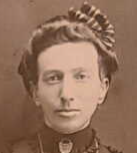
Then in May, a distant relative messaged me to let me know I’d gotten the name of our second great-grandmother wrong.

Oh really?

You see, I have baptism records, census records from 1870, 1880, and 1900, a marriage certificate, two more censuses (1920 and 1930), a death certificate, an obituary, and a tombstone photo that all name her as Caroline.

But according to my cousin, her name was Catherine, because that’s what some unnamed family member once said.

I’ll be honest—my reply was a little snarky. I just couldn’t wrap my head around someone dismissing a lifetime of documentation because of one undocumented “memory.”

Caroline, by the way, had a nervous breakdown, according to her obituary, and died shortly after. I’ve never been able to determine why—there were no family deaths or financial troubles around that time. Maybe it was a medical issue misdiagnosed as mental illness. Maybe early-onset Alzheimer’s, which runs in the family. I asked the cousin if they had more details, but… no.

So I told them, “Maybe she had a nervous breakdown because no one in the family could remember her actual name.”

I haven’t heard from them since. And that’s just fine by me.


Moral of the Story: Always, always, always check your sources. If the evidence points clearly to a conclusion—even if it contradicts a cherished family tale—you owe it to your research (and your ancestors) to accept the truth.

Next week, I’ll confess to another blunder from my early genealogy days—a really dumb trusting practice I’ve since abandoned for good.

The Summer of My Discontent: How I Survived My Genealogy Growing Pains…and What I Wish I’d Known Sooner

AI Image

The Summer of My Discontent, Lesson 1: Trust, But Verify

Every genealogist has a learning curve. Mine just happened to feel like a full-blown heatwave. And since we’re in the middle of one right now, I thought it was the perfect time to reflect on my early genealogy practices—many of which were, well, a little light on rigor.

In those early days, I stumbled (frequently), chased the wrong ancestors, trusted shaky online trees, and fell for records that weren’t what they seemed. I call this season of trial and error The Summer of My Discontent—a nod to my distant cousin Shakespeare and my own scorching missteps.

This series is an honest look back at the mistakes that taught me the most. I’ll share the traps I fell into, how I dug myself out, and, most importantly, how you can avoid getting burned on your own journey. Whether you’re just starting or already a little singed, I hope you’ll find humor, relief, and a few practical takeaways here.

Let’s turn discontent into discovery.


Lesson One: Don’t Trust, Verify

One of my earliest mistakes? Trusting other people’s research without verifying it.

That’s a bold statement, I know. Does that mean we should never trust anyone’s work? Absolutely not. But we should check it out—verify the source, analyze the findings, and make sure the evidence stands up. Only then can we safely incorporate it.

Back then, I assumed everyone else knew more than I did—so they had to be right. Spoiler: they weren’t. That realization hit me around 2:00 a.m. one Saturday morning in 1996 after I’d wasted eight hours chasing someone else’s fantasy line. Lesson learned.

I had just taken my first genealogy class in 1995, held at the local LDS church and led by a familiar face—our neighborhood pizza shop owner from Third Base Pizza (because after third base, you’re home). No, I’m not making that up.

Online research was in its infancy (remember those AOL CD giveaways at Kmart?), and the course focused on using the internet to record research. FamilySearch.org was ahead of the curve. Their online presence was growing, and the church encouraged us to use their software—Personal Ancestral File, or .paf. One enthusiastic presenter claimed he’d found 10,000 relatives using it. I had maybe 50 entered into a TI-84 computer program stored on cassette. I was in awe.

One winter Friday, with the kids in bed, I decided to do some “research.” By that, I meant: browse other people’s trees and copy their information into mine. I called it my Insta-Tree—click, match, done.

Unfortunately, no one had emphasized the importance of verifying these matches. So around 10:00 p.m., using dial-up (because no one would call that late anyway), I stumbled upon a promising lead on my husband’s Samuelson line. The tree stretched back way in time. I was thrilled. He kissed me goodnight, and I promised I’d head to bed once I reached the end of the line.

At 2:00 a.m., I reached it.

His distant ancestor, according to the tree, was none other than Thor—yes, the Norse god of thunder, complete with hammer and wife Sif. I stared in disbelief. Maybe it was just a man named Thor? Nope. The tree listed Asgard as his residence. I nearly cried.

Why would someone post that? Maybe they truly believed it. Maybe they were trolling gullible researchers like me. Either way, I realized it would take longer to undo the damage than it did to blindly click “add.”

I’m not proud of this—but I left it in my tree until January 2025. For nearly 30 years. Why? It was on my to-do list but never a priority. Plus, it served as a reminder not to trust unverified work. I finally removed it when I wrote my Swedish ancestor book and committed to scrubbing my online tree of anything unproven. I’ve since done the same for my Croatia, France, Germany, and Switzerland branches, and I’ll continue when I begin my Great Britain book this fall.

That night, exhausted, I crawled into bed. My husband stirred and asked if I’d found anything interesting. “Yeah,” I said, “you descend from the god Thor.” He grunted, rolled over, and said, “Nice.”

“No,” I thought. “Not nice at all.”

The next morning, he remembered I’d said something “interesting,” but not what it was. When I reminded him, he laughed—and still insists to this day that he’s a direct descendant of Thor. Second lesson learned: do not share your research with family until you know it’s correct. Because they will only remember the stuff you wish they’d forget.


Next week, I’ll share Lesson Two from my genealogy learning curve. Spoiler: it involves trusting a family member’s stories. Stay tuned.

Indiana Research – An Added Bonus

AI Image

Do you have Hoosiers in your history? If so, you might want to participate in Indiana State Library’s passport program to commemorate its 200th anniversary. Click here to join. Yep, the system is 200 years young! I’m going to copy the info I received via email exactly so that you, too, can win prizes being offered and have quick and easy access to 170 main libraries and their branches throughout the state from a click on your cell phone:

“As the Indiana State Library prepares to celebrate its 200th anniversary this year, the Indiana Library Passport is offering new prizes and activities. A brand new limited-edition bicentennial celebration mug and a special year-end prize drawing are included in the offerings.

The Indiana Library Passport, a creative digital experience that encourages everyone to visit libraries across the Hoosier state, is open to Indiana residents and outside visitors alike and showcases nearly 170 main libraries and branches.

After users provide their name, email address and mobile phone number, a link will be sent to their mobile phone, which will add a button icon to their home screen. From there, users are free to begin visiting Hoosier libraries. Users access the passport to check in to a participating library using their phone’s location services. When a user checks in to a library, they earn points, which can be redeemed to claim prizes directly through the passport.

In addition to allowing users to earn redeemable points, the passport automatically enters each user into a quarterly prize drawing every time they check in to a library. Passport users are permitted to check in to each library or branch once per week.

In 2025, in addition to the regular quarterly prize drawings, a special year-end prize drawing will take place. Everyone who physically checks into the Indiana State Library – located at 315 W. Ohio St. in downtown Indianapolis – between Jan. 1, 2025 and Dec. 31, 2025, will be entered to win a copy of “Laying the Foundation,” a brand new book featuring collection highlights from the Indiana State Library. The book features 100 items from the library’s collection. Items in the book represent only a small fraction of the historic and culturally significant materials held by the Indiana State library. The book is also available for purchase for $20 in the Nook Gift Shop on the first floor of the State Library.

Those who cannot check into the Indiana State Library can still participate. Beginning in January, a special limited-edition bicentennial celebration mug will be available to claim with points earned by checking into libraries all across the state. Each check-in earns a user 100 points. The special mug can be claimed for 1,000 points, but supplies are very limited. Users may also still claim the standard Indiana Library Passport mug, at a different point value.

In 2025, a new batch of prizes will be available for passport users to win via quarterly drawing in addition to favorites, like tickets to tour various historical locations across the state, courtesy of  Indiana Landmarks, and annual Indiana state park passes, courtesy of the   Indiana DNR; and admission passes to the  Indiana State Museum.

The Indiana Library Passport is also offering a new referral program. When a user refers a new user via the passport, they will earn 50 points which can be put toward earning one of the two mug prizes.

Click here to learn more about the Indiana Library Passport. Click  here  to see a list of past and present prize donors.

Libraries interested in joining the Indiana Library Passport – free of cost – should contact John Wekluk, communications director at the Indiana State Library.”

Genealogy Research Tips and Tricks Part 1

AI Image

Since coming back from my travels to France and Germany I’ve had a number of inquiries as to how I make the connections that I do. Here’s the answer and you can do this for yourself! Honestly, today’s blog isn’t just of value for those researching the Palatinate, it’s a tip for researching every area of the world!

First, I make my personal tree public online in a variety of locations (Ancestry.com, MyHeritage.com, Geneanet.com). By public, my personal info is not being shared but my deceased ancestor info is. I believe that it’s important to share all of my finds so that there is a record somewhere. Unfortunately, records can be lost or destroyed easily so the more places that my information is available WITH SOURCES OF WHERE I FOUND THE ORIGINAL, the more likely that it will help a future generation in pursuing their own lines.

The sourcing is extremely important because it allows others to go back to that source and validate my information. Many online trees do not provide their sources which leads to the thinking that no one should use online family trees because they aren’t accurate. That thinking is incorrect – we should look at all available sources as some may give a hint. That hint can be helpful, meaning it will lead you to verify the info is correct or it will lead you to prove it is wrong. I just completed a client report where the client’s great grandfather was reported to have his wife and mother with the identical name and dates. Obviously, this was not correct but more than half of all trees online showed this info. Why? Because they copied from each other without validating sources.

It was not hard to discover how the problem arose – the great grandfather’s death certificate info gave his wife’s name as her given name and her married name. Under mother, the informant provided the woman’s maiden name. The informant was a daughter. She was giving her mother’s maiden name but that’s not what the form was asking for – it was asking for her father’s mother’s maiden name. In times of grief, people often give inaccurate info and this was the case. Just because info is provided on a governmental document does not make it correct!

Definitely learn more about how to analyze and the types of sources that can be consulted by reading the Board for Certification of Genealogists, Genealogy Standards, fiftieth-anniversary edition (Nashville, TN: Ancestry, 2014).

When you have a public well sourced tree widely available you will make more connections.

Another way I make connections is through my writing. The more places I have my work published, the more widely I have spread the word about an ancestor. This increased the odds that a family member will find me. Where do I get my writing published? I blog weekly on my website and through blogspot.com, which is free. Since blogspot is a Google product, my topics rise to the top of Google’s search engine which leads to even more hits when someone is searching for a surname. I also publish in journals and magazines that focus on the location where my ancestors once lived. I’ve even published an eBook and sell it at a very low cost because I’m trying to get the word out and make connections.

I also stay abreast of new technology – I use open.ai’s ChatGPT and link it to my website. This allows anyone who is using that company’s AI to receive current info on the surnames I’m researching. I’ve blogged in the past about using the Whova conference app to make connections and that, too, has been helpful.

One additional important piece of tech is to make sure that you keep the same email or at least, if you do change it, you forward from your old email to your new address. That way, people will always be able to find you.

I am not a Facebook fan but I have used it to make connections, too. LinkedIn helps with making connections with professionals around the globe, as does the Association of Professional Genealogists (APG). I would not have discovered my serendipity connections without using both LinkedIn and APG.

Obviously, the easier you are to find the more connections you will make. Online tools – technology – writing are all the initial ways I make connections.

Next week, I’ll be drilling down on the connections I have made to help you discover where your hard to find documents in the Palatinate might reside.

Dispensations in Days of Old

AI image

My blog is a day late due to my return from attending the 36th International Congress of Genealogical and Heraldic Sciences in Boston. It was the first time the over 100 year old conference was held in the U.S. and I was delighted to be able to present on Tracing Noble Roots: Validating the plementi ljudi (pl) Lineage in Former Austria-Hungary. My talk was on how you, too, can identify your noble Croatian ancestors. It was held in South Church, a beautiful building where Benjamin Franklin had been baptized and where I had a family member that used to play tone bells there. Nothing like following in the footsteps of others!

I’d be the first to admit that I don’t have much knowledge or experience with heraldry so I did learn a lot by attending the conference. One of the most interesting lectures involved Roman Catholic dispensation records between 1250-1558 in Great Britain. I didn’t know they existed and they may be important to your family if you are researching that time period.

From the earliest time until Henry VIII cut his ties with the Roman Catholic church, dispensations were required to legitimize a marriage. For a fee, the amount of which is unknown, couples who wanted to marry were required to complete paperwork with their local parish which would then research if the couple was closely related. If couples did not pay for this “service,” and it was later determined that they were closely related (1st-2nd cousin) their marriage was considered void and any children of the marriage would not be eligible to inherit from the estate. Meaning, the Roman Catholic Church obtained the estate since their was no “legitimate” heirs at the time of the parents death.

You can find the 1000+ dispensations in the Calendar of Papal Registers, Britain, and Ireland series under Paper Regesta through 1534. You may also look at the Apostolic Penitentiary to England and Wales through 1503 that were indexed and published by the Canterbury and York Society. Unfortunately, I don’t know how to access the publication.

During the Q&A, a discussion ensued on whether other countries dispensations were available. I did a quick internet search and discovered that was the case for Austria-Hungary. Apparently, if you were a noble you couldn’t wed unless you were 3rd cousins or further related whereas peasants could wed at 2nd cousin status or back.

Further discussion led to the use of church banns used prior to a couple’s wedding. This would be an interesting research topic to determine if those banns were added after Henry VII to continue the validation that a couple were not closely related. “Speak now or forever hold your peace” could then be considered the final measure used to legitimize the marriage in the absence of the church researching the couple’s genealogy.

Book Review – Building a Legacy by Rebecca Shamblin

Disclosure: I received a free copy of this book for review purposes.

We all love research, but sometimes we forget to keep our family trees safe from simple errors or unexpected disasters. Rebecca Shamblin to the rescue! Her latest book, Building a Legacy: A Guide to Combining Ancestry.com and Family Tree Maker, is a step-by-step guide to preserving your hard work.

Not sure why you should sync your Ancestry tree? The explanations are clear and concise. Rebecca provides excellent ideas on how to make the most of both tools. Connecting with distant cousins is crucial for gaining valuable information about ancestors. Remember, not everything is available in record sets! A photo, oral history, or a Bible entry might help you overcome a brick wall in your research. The best way to obtain these family-held items is to make connections via your tree. For those needing to keep their information confidential, Rebecca explains how to ensure complete privacy in Figure 59.

Rebecca noted that Ancestry.com once owned Family Tree Maker (FTM). Although it had a checkered past with several owners (Banner Blue Software, Broderbund, The Learning Company, SoftKey, Mattel, and Ancestry), FTM has improved through Software MacKiev. I had frustrations with the older versions, but repurchasing the updated software was a good decision, and Rebecca’s book is an excellent resource I wish I had last year.

Whether you prefer Ancestry.com or FTM, Rebecca’s instructions are easy to follow, with examples for both programs. Your view might differ slightly from the examples in the book. For instance, when I sync Ancestry to FTM as shown in Figure 12, I don’t need to sign in to Ancestry again. If yours is set up like mine, just skip that step.

With my large Ancestry tree, I sometimes have to re-sign into Ancestry during a sync. FTM’s 24/7 tech support helped me find a workaround for this issue. Rebecca recommended checking the box for Ancestry Citation Media when downloading. For large trees with heavy media, this might not work well. Instead, download the tree without citation media (Figure 19). You can easily obtain citation media later by clicking on any thumbnail under the Media tab and pressing Ctrl + F5. Choose to add all citations, then repeat the process to add only the missing ones for extra security.

Tree Vault is mentioned as a valuable add-on for data safety. However, be cautious. I accidentally deleted files from OneDrive that Tree Vault used, causing issues. FTM flagged the problem, and I had to resync the trees. Lesson learned!

Rebecca mentioned that some Ancestry features are available to free account users. For those on a budget, here’s a link to get a free Ancestry membership: Free Registered Guest Accounts. Note that with a free account, you can’t search all records. Keep in mind if you use Ancestry at your local library, you can’t view or create your own tree.

One of Rebecca’s most helpful tips is how to set up FTM on more than one computer. This is great if you use a desktop at home and a laptop in archives. Follow her directions, and you’re good to go.

I’d like to add a tip for dealing with Newspapers.com’s OCR. If you’re unsure about confusing words, try using AI to make corrections. However, always verify with the original source to ensure accuracy. Your local library might offer free access to Newspapers.com so check that out.

Rebecca shared issues she encountered when backing up and compacting her tree, which I’ve also faced. Her book is a must have if you are using FTM to avoid those problems!

Building a Legacy is a valuable resource for researchers at all levels. I highly recommend purchasing this book . It’s offered in a variety of ways – digital pdf, black and white paperback, spiral bound color or a hardcover color edition.