
While researching the dynastic connections for Volumes 3 & 4 of Echoes of Britannia, I kept having the same reaction over and over again: Wait… they were connected to where?
Britain was tying into Iberia.
Then Italy.
Then Hungary.
Then Byzantium.
Then Slavic territories far beyond anything that felt intuitively “British.”
I knew the Vikings went everywhere, that part wasn’t surprising. But what caught me off guard was just how deeply Saxons, Normans, Franks, Iberians, Italians, Hungarians, and Byzantine-linked elites were woven into Britain’s ruling families. These weren’t isolated marriages or rare diplomatic curiosities. They were part of a broad, sustained network.
Which raises the obvious question modern minds struggle with:
How did this actually work?
No phones. No email. Limited literacy. Slow travel. Dozens of spoken languages.
And yet, it worked.
Genealogy, once again, forced me to rethink my assumptions.
- There Was No Single Spoken Language But There Was a System!
The medieval world did not rely on one universal spoken language. What it relied on instead was a layered communication system, where different languages served different purposes.
At the center of that system was Latin.
From roughly the ninth century through the late Middle Ages, Latin functioned as the administrative glue of Europe. It was the language of:
- diplomacy
- treaties
- royal charters
- marriage contracts
- ecclesiastical records
- legal proceedings
If something mattered across borders, it was written in Latin.
That doesn’t mean kings and queens sat around conversing fluently in Latin over dinner. It means their administrations could communicate seamlessly even when rulers themselves spoke different vernaculars.
This is an important distinction genealogy makes visible: rulers did not need to be literate if their systems were.
2. The Clergy Were the Communication Network
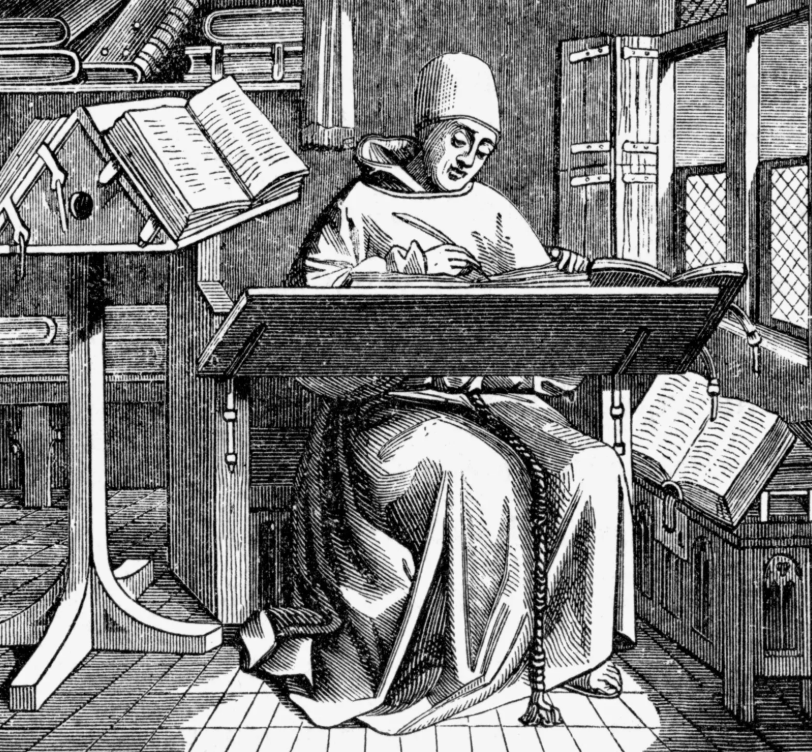
In a world without technology, communication was human and the most mobile, educated humans were clergy.
Priests, monks, bishops, and notaries:
- were trained in Latin
- moved between courts, monasteries, and dioceses
- served as scribes, translators, advisors, and diplomats
- maintained correspondence across thousands of miles
A bishop in England could correspond with a monastery in Italy or a royal court near Hungary with little difficulty because they shared the same educational foundation.
This clerical network is one of the most underestimated forces in medieval connectivity. It never truly collapsed, even in times of political chaos. Genealogy doesn’t always spotlight it because clergy leave fewer descendants but their documentary footprints are everywhere.
3. Vernacular Languages Were Not the Barrier We Imagine
Another modern assumption genealogy dismantles is the idea that language differences must have made communication nearly impossible.
In reality, elite multilingualism was normal.
Consider:
- Norman rulers spoke Old French, governed English speakers, and relied on Latin documentation
- Scandinavian elites blended Old Norse and Old English
- Iberian courts operated in early Romance languages alongside Latin and often Arabic or Hebrew
- Byzantine elites used Greek internally but communicated externally through Latin-trained intermediaries
Royal and noble children were frequently raised multilingual. They were fostered in foreign courts, educated by clerics, and married into households where new languages were learned as a matter of survival.
When a British noblewoman married into Castile or Lombardy, she didn’t arrive linguistically isolated. She arrived with tutors, chaplains, ladies-in-waiting, and clerks who maintained continuity while adaptation occurred.
4. Marriage Was a Communication Technology
Genealogy makes one thing clear over and over again: marriage carried infrastructure with it.
A dynastic marriage wasn’t just a bride and groom. It was:
- an entourage
- translators
- administrators
- cultural intermediaries
Courts didn’t become multilingual accidentally. Marriage imported language, customs, and political intelligence.
This is one reason Britain’s links to Iberia, Italy, and the Slavic world feel so sudden when viewed casually but look entirely logical when traced through families. Every marriage was also a conduit.
5, Trade Routes Were Information Routes
It’s impossible to separate genealogy from geography and this is where the Vikings stop being the “exception” and start being the illustration.
Trade routes across:
- the North Sea
- the Baltic
- the Mediterranean
- major river systems like the Rhine and Danube
moved more than goods. They moved ideas, norms, stories, political knowledge, and people.
England wasn’t at the edge of Europe. It was part of a maritime and river-based world that connected Britain to Byzantium more reliably than many inland regions.
By the time dynasties intermarried, the world they were entering was already familiar.
Byzantium Only Feels Distant Because We Were Taught It Was
For modern audiences, Byzantine connections often feel the most shocking. That’s largely because our historical narratives split “East” and “West” far earlier than medieval reality did.
In the medieval mind, Byzantium was:
- Christian
- imperial
- diplomatically engaged
- genealogically relevant
Byzantine elites used Greek internally and Latin externally. They intermarried with Slavic, Hungarian, and Western ruling houses. These connections didn’t feel exotic at the time, they feel exotic now because modern history textbooks simplified them away.
So Was There a Common Language?
Functionally, yes — Latin.
Practically, it depended on context.
Administration and law: Latin
Religion: Latin in the West, Greek in the East
Court life: local vernaculars and French
Diplomacy: Latin
Daily life: regional languages
This layered system worked because everyone understood its rules.
6. Why This Matters for Echoes of Britannia
Volumes 3 & 4 of my book didn’t uncover anomalies. It uncovered how Europe functioned.
Britain was not shaped in isolation. It was shaped through:
- marriage networks
- clerical communication
- trade routes
- multilingual courts
What feels astonishing now is only astonishing because modern narratives falsely emphasize fragmentation. Medieval Europe was plural but integrated.
7. The Larger Genealogical Lesson
Technology didn’t create connectivity.
People did.
Systems built on education, mobility, and shared administrative languages connected continents long before cables and satellites existed.
Genealogy reminds us of this quietly and persistently. Every marriage record, charter, and dynastic link tells the same story: the medieval world was more interconnected and more functional than we were taught to believe.
And once you see it, you can’t unsee it.


