
Wrong Boat, Right Story: Cracking a Pilgrim Family Myth

Not all pilgrim stories wear black hats or buckle shoes. Some travel quietly through time in meeting minutes, migration maps, and a stray penciled “(Pilgrim)” on a lineage list. No dramatic claims, no grand family lore, just a quiet truth waiting patiently until the right record whispers at the right moment.

This Thanksgiving, I’m grateful not only for the bold ancestors who stood at the prow of history, but also for the gentle ones who crossed oceans in faith and humility, leaving their legacies in ink and example rather than brass and ceremony.

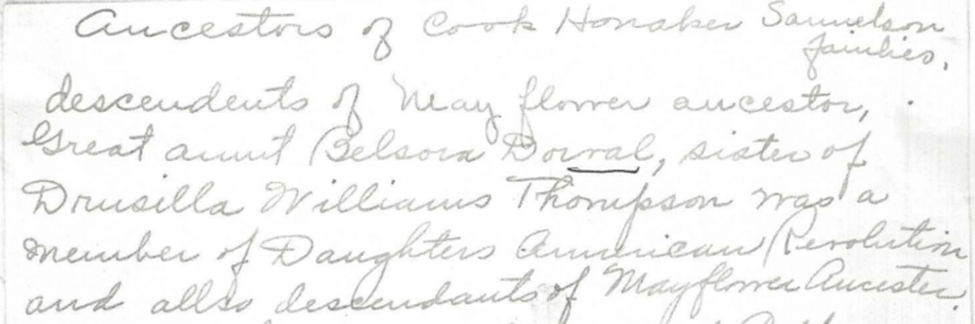
For years, my husband’s Williams family cherished a tale that they were descended from a Pilgrim. The “proof” sat in a letter written in the 1960s by the family matriarch, Gertrude Honaker, who wrote that Balsora Dorval had belonged to both the DAR and a Mayflower-related society.[1]

There was only one hitch: no such membership could be found. Not with the DAR, not with the General Society of Mayflower Descendants, not in early Pilgrim lineage rolls.[2] A genealogical dead-end dressed in patriotic stationery.

Balsora, the daughter of John Hicks Williams and Catherine Jarvis was born 23 April 1821, on Long Island, New York, the eldest of ten.[3] She followed her family to Lansinghburgh, Rensselaer, New York and married Edward Dorval in 1845.[4] The couple eventually made their way to Chicago and then Toulon, Stark, Illinois.[5] She died in Toulon on 22 December 1907 and is buried there.[6] She lived a solid, steady American life. But as for those lineage memberships? Silence.
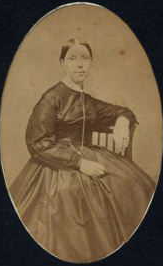
Balsora Williams Dorval c. 1860

Still, I never let go of the thread. Family stories rarely spring from nothing; the facts just sometimes take the scenic route.

Then, while drafting sketches for my current genealogy project, Echoes of Brittania, I stumbled across a saved reference: The Lineages of Members of the National Society of Sons and Daughters of the Pilgrims, Vol. II. There, under membership no. 8308 for Della Ruthe Skates of Parma, Ohio, was a lineage tracing back to:

Dr. John Rodman II (Pilgrim)
(ca. 1653 – 10 Jul 1731)
m. Mary Scammon (ca. 1663 – 24 Feb 1748)

It cited Jones, Rodman Family Genealogy; History of Hocking Valley, Ohio.

And suddenly, the light came on.

Dr. Rodman wasn’t a Mayflower Pilgrim. He was a Quaker physician imprisoned in New Ross, County Wexford, Ireland for refusing to remove his hat in church.[7] He was banished to Barbadoes where he and wife Elizabeth, parentage unknown, raised their family. Two of their sons, John and Thomas, like their father was a physician; the brothers decided to relocate to Newport Rhode Island where John married second, Mary Scammon in 1682.[8] So the actual line runs: Dr. John Rodman -Thomas Rodman – Elizabeth Rodman m. Benjamin Hicks – Margaret Hicks m. Wilson Williams leading at last to the Williams family and to Balsora’s line.

When I think of Pilgrims, I think of the Mayflower voyage in 1620. I don’t picture a Quaker doctor arriving sixty-two years later by way of the Caribbean! But clearly, my definition and the definition beloved by late-1800s genealogists and patriotic club founders aren’t the same. Their scope was a bit more generous. That generosity was remembered by their great grand nieces.

So this Thanksgiving, as we’re passing around the sweet potatoes, I can finally share that I’ve solved the Pilgrim family mystery. Different ship, different year, different take on the meaning of “pilgrim.”

And here’s the delicious part: in all this, I had to laugh, because my research long ago found that the family does descend from an early Plymouth settler Robert Hicks, who arrived on the Fortune in 1621, just one year after the Mayflower.[9] Somehow, that piece drifted out of family memory while the Barbados Quaker got promoted to “Pilgrim.” It must have been the hat!


[1] Gertrude Honaker, Ancestors of the Cook Honaker Samuelson Families, family history letter written to Eileen Courtney, mid 1960s, shared with author in 2001

[2] Letter from Mrs. Thomas Gee Burkey, National Society Daughters of the American Revolution to Ellen C. Courtney, 9 Mar 1993, no record of Balsora’s membership.

[3] Findagrave.com, Memorial id 64646514, Balsora Williams Dorval (1821-1907), citing Toulon Cemetery, Toulon, Stark, Illinois, memorial maintained by Simmerly3, tombstone photo by Cindy Eberle.

  Oakwood Cemetery Burial Card, John Hicks Williams and Catharine [Hicks] Williams, Lot 184, copy held by author. Balsora and her sister, Elizabeth Williams Son were transferred their parent’s burial plots.

  Stark County, Illinois Personal and Statistical Particulars and Medical Certificate of Death, 1 Feb 1908, held by author. Place of birth Long Island, N.Y.

[4] 1850 U.S. federal census, Lansingburgh, Rensselaer, New York, population schedule, p. 2333, Line 24, Belsora Dorval, digital image; Ancestry.com: accessed 2 Nov 2025, image 27 of 139.

   First Presbyterian Church of Lansingburgh, Rensselaer, New York, Marriages, Edward Dorval & Belsora Williams, 21 Apr 1845, digital image; members.tripod.com: accessed 8 Dec 2000.

[5] 1860 U.S. federal census, Chicago, Cook, Illinois, population schedule, p. 362, Line 35, B. Dorvol, digital image; Ancestry.com: accessed 2 Nov 2025, image 362 of 404.

  1900 U.S. federal census, Toulon, Stark, Illinois, population schedule, Sheet 3B, Line 66, Balsora Dorvol, digital image; Ancestry.com: accessed 2 Nov 2025, image 6 of 28.

[6] Findagrave.com, Memorial id 64646514, Balsora Williams Dorval (1821-1907).

  Stark County [IL] News, Mrs. B. Dorval, 24 Dec 1907, p. 10, col. 6.

[7] Fuller and Holmes, 1671, quoted in Irish Pedigrees, 377; see also Rutty’s History of the Quakers in Ireland (1751), 366.

[8] Newport freeman list, 6 May 1684.

  U.S., New England marriages Prior to 1700, Mary Scammon & John Rodman, 25 Oct 1682, digital image; Ancestry.com: accessed 2 Nov 2025, image 647 of 1022. NOTE: 1st wife Christiana Gibson likely did in Barbados.

[9] Robert Charles Anderson, The Great Migration Begins: Immigrants to New England, 1620–1633, 3 vols. (Boston: New England Historic Genealogical Society, 1995), 2:924–26, “Robert Hicks” (origin London; Fortune, 1621; occupation fellmonger; freeman 1633; tax 1639; will 1647; children grouped by marriages; wife Margaret, maiden name unproven).
Saturday Morning Confusion and Insights

It’s been an interesting day in the Samuelson household which is the reason my blog is late. I don’t know about you but since we’ve been sheltering-in-place, we’ve had way too many broken devices.  The odd thing is that most were under warranty and when those were being “serviced,” it resulted in another breakage. First it was the hot tub, then it was the refrigerator, and now it’s a yard that is a total disaster.

Before the world came to a stop, hubby and I had discussed having a well put in so that our garden could be watered more frequently in the dry season then our city permits.  I had contacted a company who said they would be out the following week which turned out to be 6 weeks later.  Now this wasn’t the fault of the company; in our area there are various environmental permits that must be acquired and the company couldn’t comply with the laws because none of the other organizations were opened.  Finally, the permits were obtained and the well was supposed to be drilled yesterday.

My husband told the two service men to be careful because he thought there was buried cables where they planned to dig.  I then showed them a photo from the last time we had the underground cable locators out showing exactly where the buried lines were.  Did these two guys listen?  Since you already know the answer, I’ll just continue…

Hubby was on a work related Zoom meeting and I was researching on FindMyPast when the internet connection was lost.  We went outside and there were these two young men looking sullenly down at the broken cables.  They had also cut the sprinkler line.  

Thank goodness we were able to have the line restored this morning but then there was the matter of who was paying for the charge.  The owner of the well company said he would take care of it but the connection wasn’t a simple one and now someone else is going to have to come out to bury cable and get it under our driveway.  And dig up the whole front of our yard to bury the new line.

In the meantime, while the well company was trying to fix the broken sprinkler line, a torrential downpour occurred.  They left in a hurry with the job undone.  Hubby, who had been trying to help them, came in drenched and cold.  I ordered him to the shower and that’s when we realized they had the water turned off.  So, out we go in the downpour to turn the water back on.  Then we noticed that something was amiss – we just didn’t have the pressure we had previously had.  After the storm subsided we went back outside and discovered the company had left the sprinkler on and it had been coming out full force for two hours.  This resulted in flooding on that side of the house.  Yeah, it’s been a day!  But we do have internet!!!

So, being homebound with no access to the outside world I decided I would catch up on my reading.  I am happy to report I’ve read my back issues of Smithsonian, National Geo, AAA and various journals.  My favorite, though, was the winter issue of American Ancestors.  The entire magazine is devoted to the 400th anniversary of the Mayflower.  Even if you aren’t a Mayflower descendant, this is a must read.

My favorite articles were “We are still here,” a Wampanoag perspective, “Keeping Tradition Alive, A Portrayal of Wampanoag Life,” “New Discoveries in Mayflower Genealogy Uncovering Connections through DNA,” “Finding Unexpected Mayflower Kinships,” and “Ideas for Future Mayflower Research.”

The last three articles provide hints for anyone who is trying to locate records from the time period, even if you don’t have a Mayflower connection.  Checking manorial records, registers, and recusancy (a record of nonconformists who refused to attend Church of England services) are excellent sources to use to hunt down your elusive ancestors. I had used the recusancy records years ago when researching some of my Quaker ancestors but had forgotten about that tool.  I plan to check it out again as I search for one of my Hollingshead family members who had left merry ole England for New Jersey by way of Barbados.

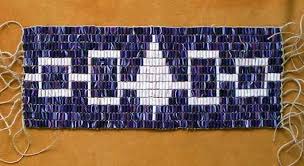
The first two articles, from a Native American perspective, were clearly the best of the bunch.  I learned so much and what sticks in my mind most is the original reason for wampum belts.  If you thought, as I had, they were currency, well, you just have to read the article.  I was blown away by truth.  (Hint:  read page 27!)  I was aware of Native American’s culture that honors the elderly and ancestors but I had no idea the artistry in the remembrances that was involved.  The deep symbolism in a wampum belt will remain with me forever.  

Pilgrim’s Pride Via A Lettter

Took a minute to clean my email after putting away the fall decorations and found the following link about the Mayflower at Crestleaf Thanksgiving Genealogy:  5 Steps to Finding Pilgrim Ancestors.

I’ve been trying to discover who my hubby’s Mayflower ancestor was for years.  I have my suspicion but no concrete evidence.

My mother-in-law used to say her family hasn’t been in the U.S. very long, just since the 1700’s. That always made me laugh since my maternal grandmother didn’t arrive until 1913.  Hubby’s father’s family supposedly arrived on the Mayflower but no one could recall who the gateway ancestor was. Hubby swore that the Thanksgiving oyster stuffing (which he absolutely hated) was a hand me down recipe on his dad’s side from that event.  Personally, I figured the stuffing recipe was from Oyster Bay, Long Island, New York where I have been able to trace his line.  His mom stopped making it in the 1960’s because no one liked it.  She had gotten the recipe from her mother-in-law and I checked with everyone on all sides and although it was well remembered, no one has made it or has it written down.  I love old family recipes so that’s a major disappointment for me.

The family also knew they had a Mayflower ancestor because of a letter that was written by a family genealogist who was a member of the Mayflower Society.  Problem was, no one knew the name of the family genealogist or had a copy of the letter.

It wasn’t until long after my in-laws passed away that I connected via the internet with cousins who happened to have a copy of the letter.  Like most family tales, the story I was told had been confused somewhat.  The letter writer was NOT a member of the Mayflower Society.  She was also not a professional genealogist but family history was certainly an interest for her.

How the letter came to be written, I think, is the most interesting part of the story.  In the 1960’s a teacher in Chicago gave her students an assignment to write a paper on their family history.  Cousin went home and her mother knew that paternal aunt who lived in Ohio was the oldest living relative so she contacted auntie for information.  The aunt said she would write down everything she recalled and that is how the family history came to be recorded.

I never could figure out how my in-laws would have known about the letter as they weren’t in contact with the Chicago cousin.  Perhaps there is another letter out there somewhere that the aunt took her information from or maybe, as this was a large family, the Chicago cousins shared the Ohio cousins info with one of the Indiana cousins and the information filtered down to my in-laws.

The letter mentions the William’s line and claims that a Balsora Williams Dorval was a member of the Mayflower Society and the Daughters of the American Revolution.  Checked with both organizations and they have no record of her.  The Mayflower Society told me that many of their records were lost over the years and that during the time Balsora lived (1821-1907) the Society was more accepting of memberships, meaning you might become a member without qualifying via genealogical proof standards that are used today.  Some groups even allowed membership if your ancestor arrived on a boat other than the Mayflower, as long as it was shortly after.  I would love to be able to see how Balsora became a member, if in fact, she did.  I say that because the letter contains a lot of wrong information. The family Bible contradicts places of marriage, numbers of children, and spellings of names written in the letter.  That’s not to say there isn’t a lot of great information in the letter that was helpful to us in tracing the William’s family.

Family information is important to record and it’s not too late to download the free ap from StoryCorps.me.  In conjunction with the Library of Congress, the program is designed for teens to record audio storytelling of their grand and great grandparents.  With more holiday get togethers on the horizon, further opportunities to join in are possible.  Just visit The Great Thanksgiving Listen for more info.  The recording can be uploaded to the Library of Congress and be preserved.  Making your family’s story included is an awesome way to honor your loved ones, preserve history and get your younger relatives interested in genealogy.

So the hunt for our Mayflower (maybe) ancestor continues…