
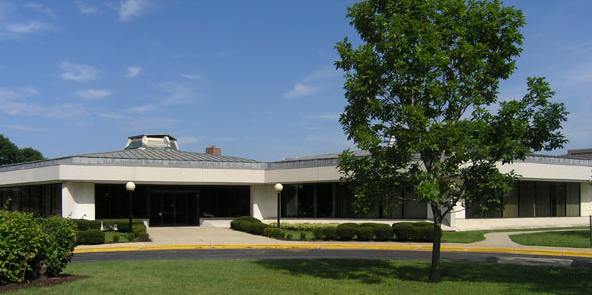
On 23 June 2026, the National Archives and Records Administration (NARA) announced plans to close two of its regional archive, Chicago and San Francisco, within the next three years. According to the announcement, the transfer of records could begin as early as August 2026.
For many Americans, this may sound like another government reorganization.
It is not.
It is a decision that could fundamentally change access to some of our nation’s most important historical records.
As genealogists, we understand something many people do not: once access to records is reduced, it is rarely restored.
More Than Buildings
Regional archives are not warehouses filled with dusty boxes.
They are active research centers where historians, attorneys, journalists, veterans, students, tribal researchers, authors, and genealogists access the original federal records that document our nation’s history.
The Chicago and San Francisco facilities preserve millions of records that are unique to their regions. Many have never been digitized. Many exist nowhere else.
These collections include federal court records, naturalizations, military records, customs records, Native American records, immigration files, maps, photographs, engineering drawings, and countless other documents that researchers rely upon every day.
Without these facilities, access becomes more difficult, more expensive, and potentially unavailable for extended periods while records are relocated.
“Everything Is Online”
It isn’t. That may be the biggest misconception surrounding these proposed closures.
Despite remarkable progress in digitization, only a small percentage of NARA’s holdings are available online. Billions of pages remain accessible only by visiting an archive or requesting assistance from knowledgeable archivists.
Even when records have been scanned, researchers frequently need to examine the original document. Marginal notes, seals, handwriting, attached correspondence, paper characteristics, and filing context often provide clues that digital images cannot fully capture.
As every experienced genealogist knows, the answer to a decades-old mystery is sometimes found in a note scribbled in the margin or in the document tucked behind the one you expected to find.
This Became Personal
This issue struck particularly close to home for me.
As many of my readers know, I am currently pursuing Croatian dual citizenship based on my family heritage. One of the requirements for my application involved obtaining federal records from the National Archives at Chicago.
Those records are not simply interesting historical documents.
They are legal evidence.
Without them, my citizenship application could not move forward.
That experience reminded me that regional archives do far more than preserve history.
Every day they help individuals prove history.
Veterans rely upon them to document military service.
Families use them to establish citizenship.
Attorneys obtain records for legal proceedings.
Tribal communities document their heritage.
Historians uncover stories that have remained hidden for generations.
These are working institutions that continue to serve the public every day.
Questions That Deserve Answers
NARA has announced the closures. What researchers still do not know is equally important.
Where, exactly, will every collection be transferred?
Will related collections remain together?
How long will records be unavailable during the move?
Will enough archivists accompany the collections?
Will the receiving facilities have sufficient space and staffing?
Will public access remain at its current level?
These are not minor administrative details. They determine whether researchers can continue their work or whether projects that have taken years to build suddenly come to a halt.
Once Access Is Lost…
History teaches us that reduced access is seldom temporary.
Archives close. Staffing is reduced. Reading rooms become more difficult to use.
Travel costs increase. Fewer people can conduct research.
Eventually, stories remain undiscovered, not because the records disappeared, but because reaching them became too difficult.
History is not lost only when records are destroyed.
It is also lost when people can no longer access them.
Every Box Represents Someone’s Story
Every archival box contains more than paper. It contains a soldier’s pension application. An immigrant’s naturalization papers. A widow’s claim. A Native American land file. A ship manifest. A federal court case. A map that explains why a community developed where it did. A single document that may answer a question a family has been asking for generations.
Collectively, these records tell America’s story, not just the stories of presidents and generals, but of ordinary people whose lives built this nation.
Now Is the Time to Act
Once these facilities close, reopening them is unlikely.
If you believe America’s documentary heritage should remain accessible to future generations, now is the time to speak.
Sign the petition TODAY and share it with your FAN Club!
Contact your members of Congress.
Support the efforts of Save OUR National Archives (SONA).
Encourage your local genealogical or historical society to make its voice heard.
Share this issue with others who value history, transparency, and public access.
The National Archives do not belong to historians. They do not belong to genealogists. They belong to all Americans.
The records entrusted to NARA preserve our collective memory. Let’s not make it harder for future generations to discover who they are or where they came from.
Sources
National Archives and Records Administration. “National Archives Announces Plans for Regional Archives Realignment.” News release, 23 June 2026.
Save OUR National Archives (SONA). “Save Our National Archives.” Accessed 4 August 2026.
Organization of American Historians. “Saving America’s Story.” Accessed 4 August 2026.
Association of Professional Genealogists. Advocacy statement regarding proposed National Archives regional facility closures, 2026.