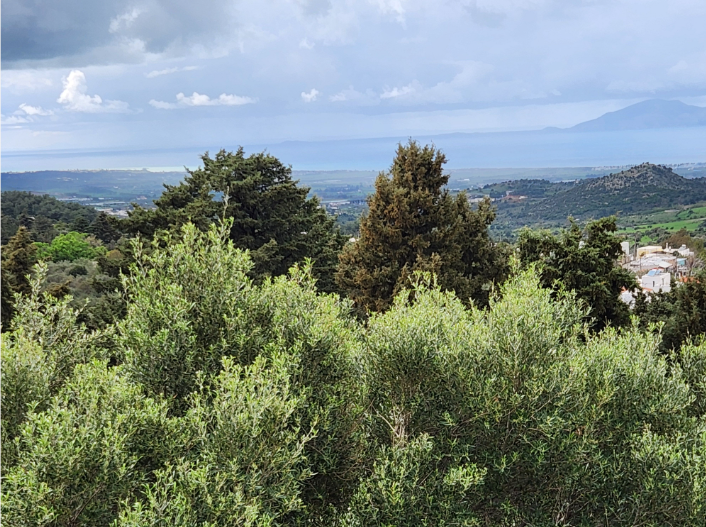
Did you guess where I traveled? It was Kos Island, Greece.
I’ve gone back in time, way back, to a place where my ancestors lived nearly 2,000 years ago. This journey didn’t begin with a record set or an archive, but with a story passed down by my grandmother. She said our family once left an island to the south, around the time of Christ. They were vintners. There were too many people. The land was dry. They left because they had to. She didn’t know the name of the island, only the reason they went.
For years, that story lingered as just that: a story. But when mitochondrial DNA entered the picture, something remarkable happened. My mtDNA traces directly across Kos Island, an island whose name my family has carried, in one form or another, since at least the 1200s, when I first find them documented in their later home in Croatia. Even more compelling, historical research confirms that Kos was overpopulated and experienced periods of drought roughly 2,000 years ago. The pieces fit, not perfectly, but persuasively.
What fascinates me most is not that the story was complete, but that it was true enough. Family stories rarely preserve dates, place names, or precise routes. What they do preserve are motives: hunger, pressure, hope, survival. In this case, the story of farmers leaving an unnamed island aligns with both genetic evidence and environmental history. That’s not coincidence, that’s migration memory.
This is why I never dismiss family stories outright. Even when details are missing or blurred, they often contain a core truth waiting to be tested. With the right tools, DNA, geography, climate history, and records, we can sometimes confirm far more than we expect. Migration leaves footprints not just in documents, but in names, occupations, and the quiet persistence of who we are.
Christmas is a season of joy, wonder, and if you’re paying attention, quiet miracles. I have a holiday story to share that has just unfolded in my own family. Those of you who work in genealogy already understand that the strange, the coincidental, and the improbable often walk hand in hand with real life. Still, what I’m about to share feels like something more.
One of our adult children has always wanted to be a mother. For years, she prepared for a child she hoped would someday be hers, cross-stitching bibs, knitting booties, quilting blankets, and crafting tiny handmade treasures. She remained hopeful, positive, and forward-thinking throughout it all. As her mom, though, my heart often ached. No matter how old your child is, it’s painful to watch them work so hard for something that doesn’t seem to be coming.
I’ve written before about my Granny, my Croatian immigrant great-grandmother, who, in the late 1800s, made a pilgrimage from her small village of Dubranec to Marija Bistrica, a Roman Catholic shrine believed to be a site of miracles. When my husband and I visited the area years later, I was stunned by the distance she traveled. The terrain is mountainous, and for a woman of that era, the journey there and back would have been difficult and dangerous.
Yet Granny believed in miracles. She was hoping for a child who would live. According to my grandmother, Granny’s daughter, triplets had died. In truth, they were likely three separate pregnancies. English was their second language, and surviving records show two boys who died in different years. I suspect the third was a miscarriage.
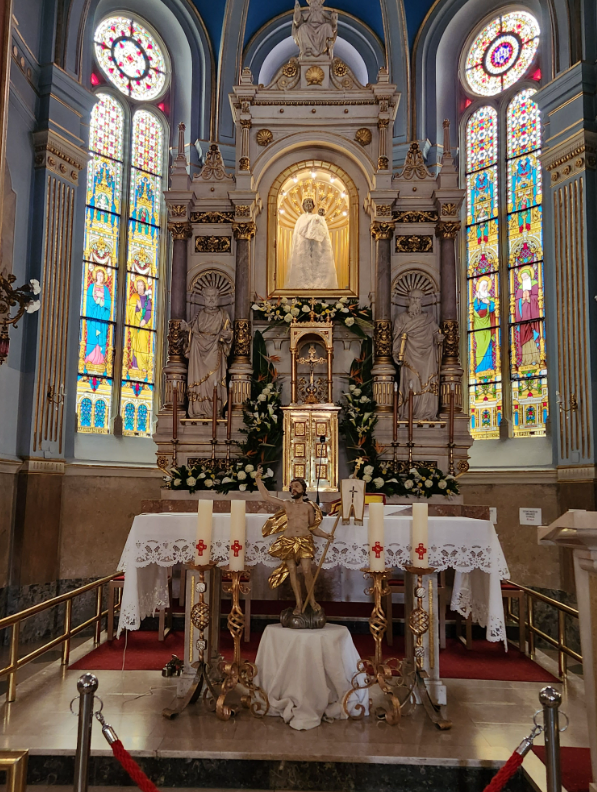
While standing in that church during my visit, I lit a candle for my own child. It couldn’t hurt, right?
Last January, after modern medicine could not help her conceive, adoption became the next step. A consultation with a lawyer in May was discouraging. The message was blunt: if an adoption happened, and that was a very big if, it would likely take three to five years. Her age worked against her. International adoption was explored, but it was even more expensive and less promising. It all felt like a closed door.
Undaunted, she decided to become a foster mom. She was told she’d likely be placed with a teenager. Her response? That was fine. And if that young person someday became a parent, she would give them all the baby items she had lovingly made over the years. Generosity, it turns out, is another of her gifts.
She was approved as a foster mom the day before Thanksgiving and prepared a room for whoever might arrive. Then, last week, she received a call: would she be interested in a newborn? If so, she needed to attend an interview on 22 December. Of course she was interested but getting away from work was no small thing. In her profession, you don’t simply take the day off. With help from a few trusted colleagues, her schedule was carefully shifted so she could attend the meeting during her lunch hour.
She was told she would hear back the following day. Instead, four hours later, the phone rang. She was informed that she was a new mom.
The day she was selected came one day after my Granny’s birthdate. Go figure.
The next day, after paperwork, we met our newest family member. Our daughter named her after Granny, with a middle name that also carries deep family meaning another story for another time.
And yet, the coincidences continued.
I had never been inside this particular hospital before, but I knew it well. When we relocated from Florida, I had inexplicably chosen a hotel right next to it. Every time I needed to access the main highway, I turned into that hospital’s parking lot. Later, I realized it was the same hospital system my paternal grandfather had used when he lived in the city.
So there was a thread connecting my maternal and paternal lines but it didn’t end there.
When we entered the NICU, I noticed the baby’s whiteboard listed a very distinctive first name: the name of my husband’s maternal grandmother. I asked if that was the baby’s name. The nurse said no. One of the staff had simply thought of it, without knowing why, and wanted something to call her until an adoptive mom was chosen.
That name belonged to the woman who had, in many ways, raised my husband.
I don’t pretend to understand how all of this came together especially during a season known for wonder. I only know that we are profoundly grateful to have this strong little angel in our lives.
We are especially thankful for the biological mother, the DCS and NICU staff, and the community members who have stepped forward with support. If you’re so inclined, we would be grateful if you’d keep this little one in your prayers.
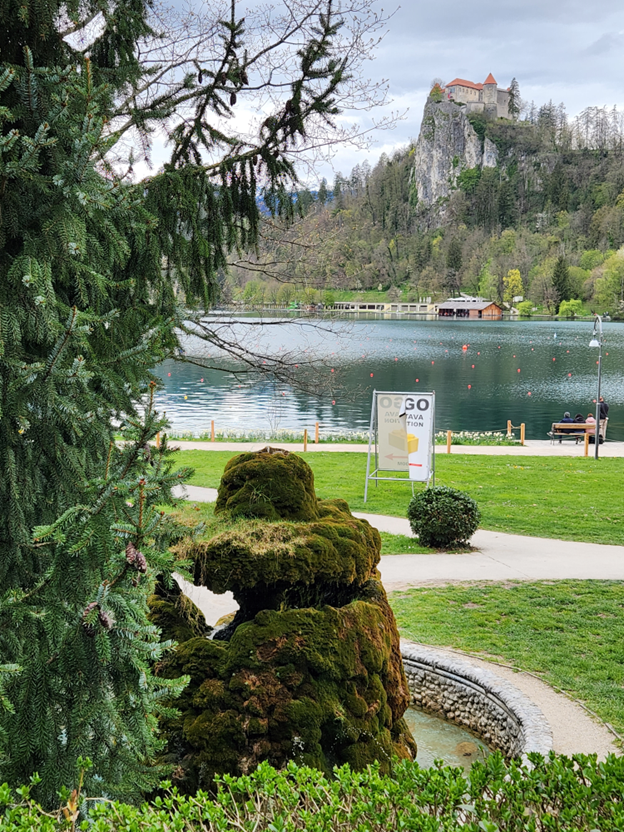
Fountain on bottom middle. Photo by Lori Samuelson
Last week I wrote about the painting that resembled my mom in our first hotel room in Croatia. My grandmother also chose to haunt us on that trip!
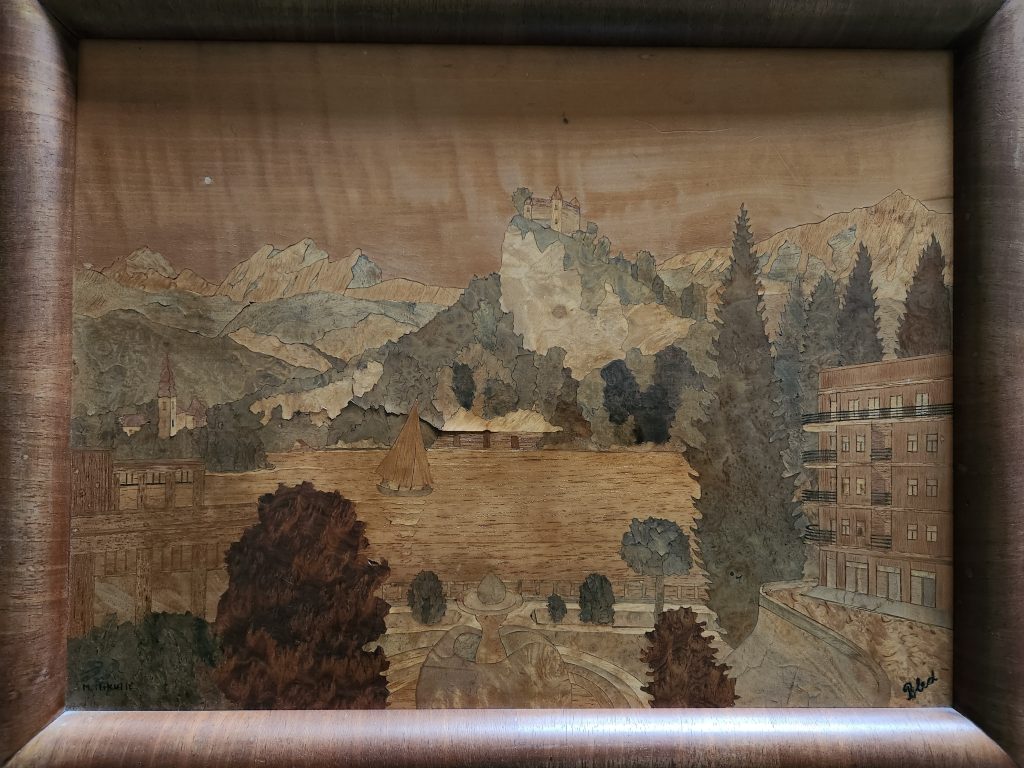
We had signed up for a Gate 1 tour that began in Zagreb, Croatia and took us also to Slovenia and Monte Negro. My grandmother had visited Croatia with her singing group in the summer of 1960 and brought back the picture above of a castle. As a child, she told me the story of our family defending a castle but made it clear the castle in the wood cutout picture was not the same one. I had no idea where she bought the picture but a clue in the bottom corner said Bled.
On our third day, we arrived in Bled and sure enough, there was a castle that closely resembled the picture I inherited from my grandmother. We toured it and learned it had been built in 900 AD. We shared a glass of wine with a monk on the top floor, visited the museum with artifacts from over the centuries, and shopped in an adorable beehive-themed room that had a live beehive in the middle.
I remarked to my husband that my grandmother must have also visited this site as in the gift shop were wooden angels that resembled the type of wood used in the castle picture we have. I inquired if they had available larger wooden pictures but they no longer do.
We returned to our hotel, which had the exact same view as the one from the picture I had and I remarked to my husband it was uncanny. The only thing missing from the woodcut was a large fountain that had been in front of the lake that our hotel faced. I mentioned this to a hotel employee who told me the fountain is still there, across the street from the hotel, behind a fence. Hubby and I went on an adventure to find it. Sure enough, obscured by overgrowth, water trickled from this ancient fountain:
Photo by Lori Samuelson
I then learned that our hotel, built in 1980, had replaced a hotel that had been on the same site. Likely, we were staying on the same land that my grandmother had stayed in 1960! Nothing like following in the footsteps of your ancestors, even when they were just on vacation.
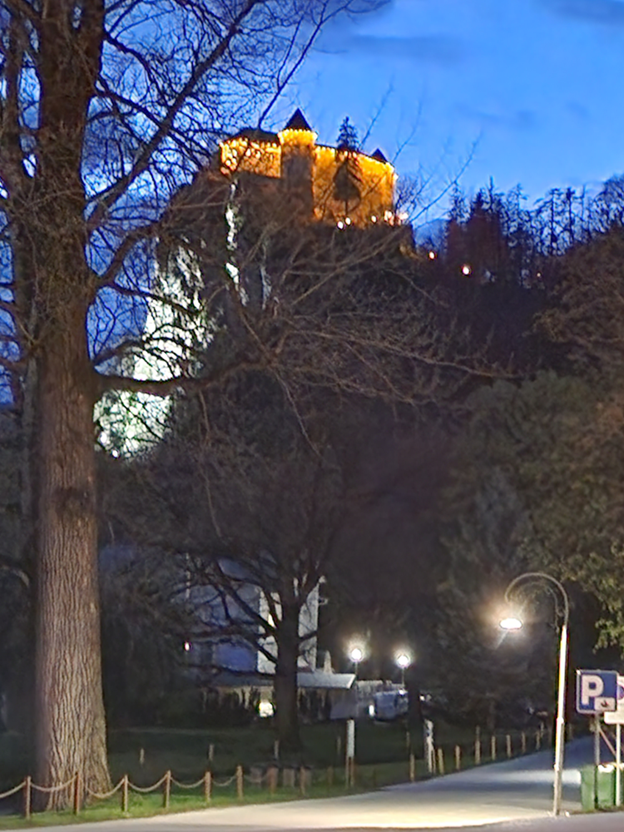
And because it’s October – here’s a night picture of the castle:
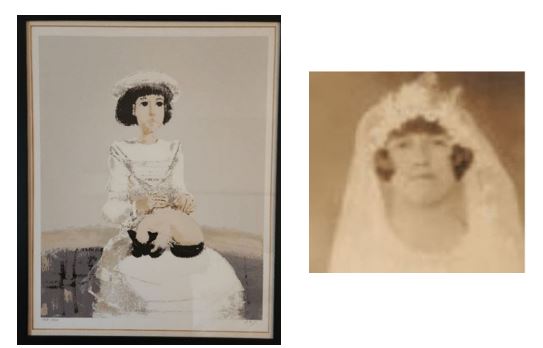
It’s Creepy October and of course, I’ve had several weird, unexplained happenings as I researched my family this past year. One of the creepiest was on April 13 when my husband and I checked into the Zagreb Croatia Sheraton and were assigned a room with the painting shown on the left. Our flight from Munich had been delayed by over 5 hours and we were exhausted when we finally made it to our hotel room. I had wanted to spend the afternoon researching at the Croatian State Archive but unfortunately, with the flight delay, that wasn’t an option. As I unzipped the suitcases to take a quick shower before we went out to explore Zagreb, my husband said,“Lor, you got to see this.” I looked up and he was pointing at the picture. I immediately noticed the resemblance to my mother. It was her birthday eve, too. It was one of those pictures whose eyes seemed to follow you wherever you went in the room. Although those Halloween pictures creep me out this one didn’t. It was comforting to think of my mom, whose parents were both from the nearby village of Dubranec from where we were staying. Pic on the right is of my mother from her communion at St. Marks Roman Catholic Church in Gary, Lake, Indiana..
Her hair darkened as she aged and she always wore it short. Her brown eyes seemed to get bigger and brighter, too. Her long face, slim nose, and lips that never smiled broadly reminded me of the painting. The white attire also caused my brain to make a connection. Of course, I had to take a picture of the picture and share it with all of you!
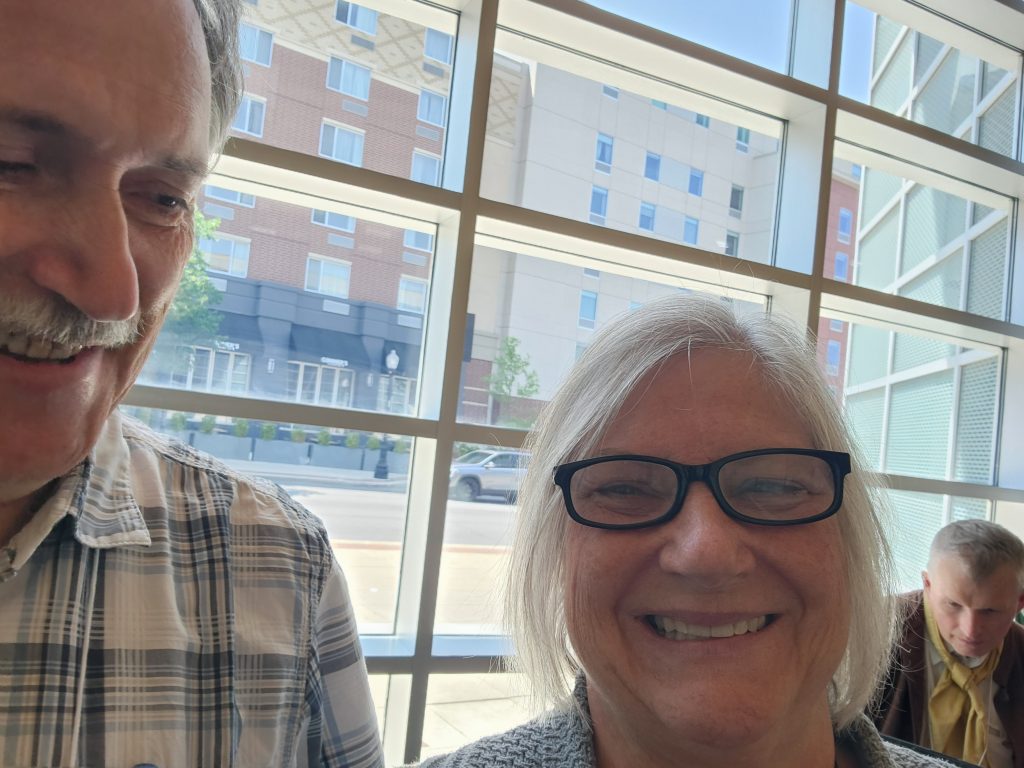
It’s definitely a small world and I have to blog about my newfound cousin, Gerhard. I didn’t even realize that the man in the background in the photo, Roland, was in this shot until I uploaded seconds ago. He’s a part of this story, too. Warning you, this is one of my weird genealogy encounters. . .
Last December I was applying to the Society of Indiana Pioneers (SIP) and needed a German translation of a newspaper record I found for my Leininger family. Husband was stumped by the script used and some of the words; the translation wasn’t making sense and online translation programs weren’t helping, either. I posted a request for help on a Facebook page and the Transitional Genealogy Forum (TGF). Roland responded and saved the day. A few weeks later, I was accepted into the SIP and Roland posted about the upcoming International German Genealogy Partnership (IGGP) that was to be held in Ft. Wayne June 9-11.
I have German ethnicity on my paternal side and have never attended a conference specifically for ethnicity. Since I now live in the greater Ft. Wayne area, I was saving time and money on travel, hotel, and meals. I decided the price, date, and location were perfect for me so I signed up with no expectations.
The conference used the WHOVA app which I used for the Association of Professional Genealogists (APG) conference last year. I wasn’t too active on the app last year as I was in the process of moving and had limited time. I highly recommend using whatever social media is available pre and during a conference to get the most out of the experience. Go back after the conference and save links/chats from the app as it is usually only available for a limited time period.
I set up pre-meetings virtually (the conference was hybrid) based on family surnames – Leininger, Kettering, Kable, and Kuhn. Gerhard recognized the surname Kuhn and messaged me that he had information he wanted to share with me in person. We agreed to meet between conference presentations. The message arrived a few minutes after I left Kessler Cemetery where I had just cleaned graves for these ancestors. Weird, I thought.
We met up on Saturday and he brought with him a transcription of military records and a copy of my 4th great-grandparent’s marriage registration. The 4gg’s were the immigrants and are buried in Kessler. I’m a member of the Daughters of Union Vets of the Civil War based on one of their son, Henry’s, service. For my long-time readers, Henry married Maria Duer, daughter of John who is buried in Kessler with no surviving marker.
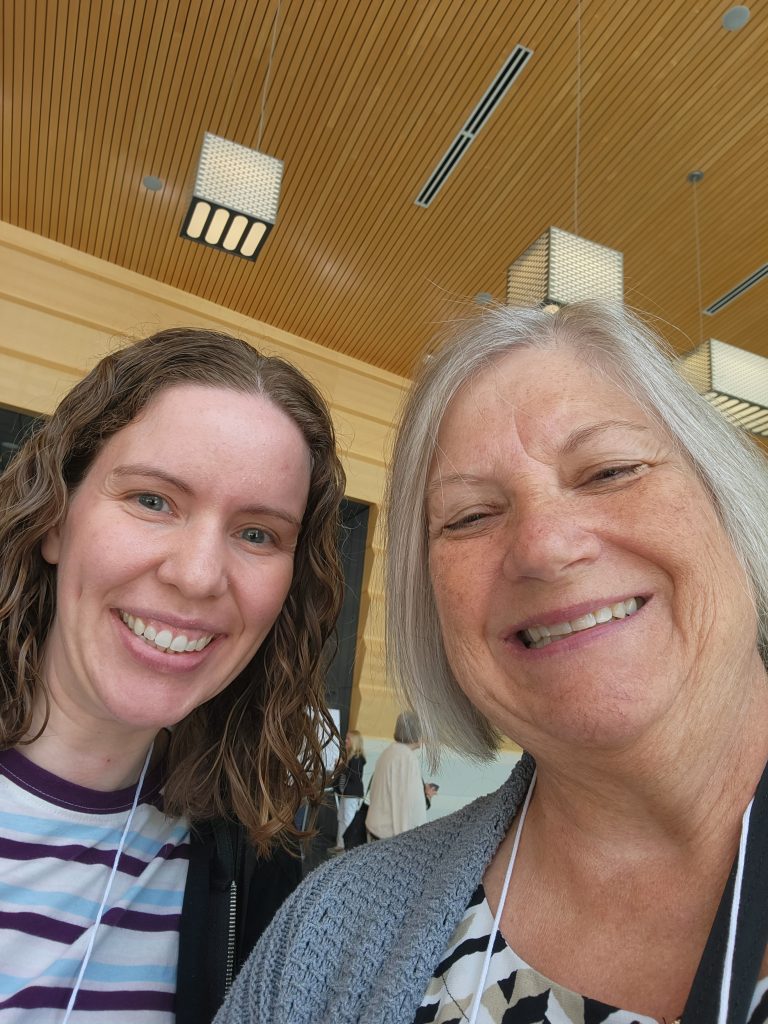
Gerhard looked up from the table we were at and recognized one of my cousins, who I had never met, passing by. He called her over:
Renee and I
We had messaged each other on the app earlier but her immigrants settled in a different part of Ohio and we weren’t sure we were related. Gerhard knew that we were and explained how. I brought up my family tree and she recognized another line we share, the Anstatts.
Gerhard also informed me that another one of my German families that I hadn’t even thought to include in my surname post was having a 200-year immigration reunion in Brazil next summer. Evidently, my Bollenbacher ancestors left Germany, my line settled in Ohio and a brother went to South America. Who knew? Gerhard, thankfully!
This brings me to point out the value of doing surname studies and/or chasing all of your lines’ immigration routes, including their siblings. I have done that with many of my Great Britain families and my Croatian lines but not my French/German. That’s now on my to-do list.
Excluding my three first cousins, I have never met anyone related to most of my French-German lines. Although Gerhard and Renee are not close genetically, we do share a common 4-5th great-grandparent.
I have connected with relatives through DNA matches, online family trees, and the Roots Tech app but I never met with anyone face-to-face at a conference. It is an extra special occasion. My husband and I are now planning a trip next year to tour the region my ancestors and his came from on our way to Sweden to follow in his family’s footsteps. BTW, my husband’s Harbaughs are from a village close to where my Leininger family originated – probably even knew each other back in the 1600s. Yep, small world!
As if that wasn’t enough, here’s another reason to attend an ethnic-oriented genealogy conference – I found information on my British and Croatian lines, too. My Daniel Hollingshead purportedly served in the British military and fought in the Battle of Blenheim where one of his brothers was killed. No info anywhere in Great Britain because neither brother was an officer. I asked for help and was given several sources in Germany to research. Hoping I find a Hollingshead buried there.
I had no expectations I would find any information on my Croatia relatives at a German conference. It didn’t dawn on me that dear old Napolean would have made that connection. Croatia was once part of Austria-Hungary and we all know what Napolean did to that area and what is now Germany. My biggest mystery after researching in Croatia remained to find my great grandfather Josip Kos’ military records. Croatia says they were sent to Vienna; the Austrian State Archives says they are all on FamilySearch. I can’t find them there and haven’t gotten an answer from FamilySearch on where they reside or if they are ever going to be available online. A researcher who attended the conference and is familiar with the records is checking for me in Vienna. Hopefully, I will one day discover the truth behind the family story of why Josip separated from the Calvary.
By attending IGGP and using the Whova app, I was able to get hints for further research on all of my ethnic origins and meet relatives I didn’t know existed. The reasonable fee to attend was priceless!
IGGP has a conference every two years and I plan to attend in Columbus, Ohio in 2015. Perhaps you’ll join me. At the last conference, Hank Z. Jones was honored and I’ve blogged about his books previously. Yes, this was definitely a Psychic Roots encounter.
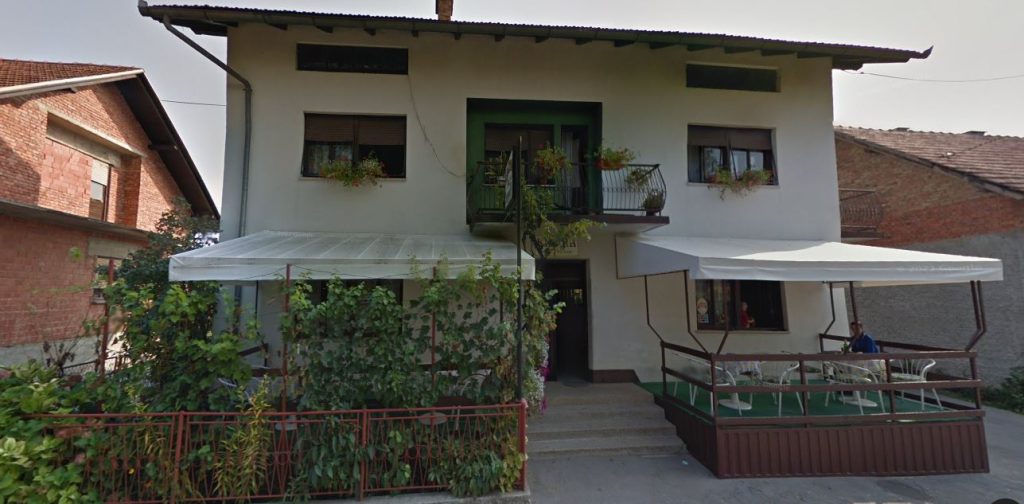
Mary Kos’ Birthplace, Dubranec, Croatia. Photo courtesy of Google.
Last week I provided recommendations on best practices for using archives in other countries. This week I’m focusing on making the most when visiting your ancestor’s hometowns.
I always wanted to walk in the village my maternal grandmother had told me about when I was young. She had described the neighborhood church with its cemetery, a family garden, and her maternal side living in the next village.
My grandmother, Mary, emigrated with her mother, Anna, and younger brother, Joseph, in July 1913 when she was 12 years old. She would become a teen a week after arriving in the U.S. My great-grandfather had come 3 years earlier and settled in Chicago after crisscrossing the country working for the Pullman Company.
I had photos of the apartment where they lived in Chicago and the houses they rented and bought in Gary, Indiana, but I had no visual of the home she resided in as a child. Grandma had returned to visit Croatia in the summer of 1960 with her singing group, Preradovic. I have a picture of her with two village women, unnamed, who she said were cousins. Truthfully, Grandma called everyone cousins and she was probably correct as the village in which she was born had only 349 people in 2011. Her mother’s ancestral village, Jerebic, only had 41 people in 2011. If they weren’t cousins, they were called kum or kuma (godfather or godmother). Definitely supports the importance of Elizabeth Shown Mills’ FAN Club! With such small numbers, everyone was connected.
There were 99 houses in town, which one was Grandma’s? For that, I turned to a genealogical report written by Sanja Frigan for my second cousin in 2008. Sanja had gone to the local church and spoke with the priest who shared records. I was able to identify the location as house number 40. This was confirmed through the only FamilySearch.org Dubranec record for my grandmother – her baptism record shows the family living in house number 40. Through the Association of Professional Genealogists, I contacted fellow genealogistLidija Sambunjak to discover if house numbers were altered since the church record was made in 1900. I highly recommend contacting a local genealogist, historian, or archaeologist as they know details of communities that aren’t available online. Lidija was able to find the new house number. She also found a record that showed the home had been built by 1861 when a census had been taken. Lidija also discovered the home was now a tavern so there was a strong possibility I could go inside and even eat in the location my grandmother had taken her first bites of food!
Getting to Dubranec was an issue; it was outside the city limits of Zagreb so no bus was available. I could Uber/taxi but I didn’t want to just get dropped off. I needed a driver who could take me to all the places I wanted to see, wait while I explored for a bit, and answer questions that might arise from what I was seeing. I was not comfortable with renting a car as I was unfamiliar with the area and there were avalanche and flash flood warnings – not something I wanted to tackle on my own. Plus, I don’t speak Croatian well and a translator would be helpful.
Lidija recommended a colleague, Nikolina Antonić, who was a historian and archaeologist. We agreed on a price for the day and in our email exchanges, she shared with me her dissertation which just happened to be in the area my family resided. Finding a knowledgeable professional might take some time so start looking as soon as you book your trip.
I shared with Nikolina my family stories regarding defending a castle, building a church, going on a pilgrimage, and being titled a nobleman. Her dissertation was about the land records for the area beginning in the 1200s so she was an expert with location and history.
Nikolina met us at our hotel at 9 AM sharp. After reading her dissertation I had questions about how my family fit into the culture of those times. Her answers helped me put the records I had found the day before into perspective. Our first stop was a recreated home that would have been typical of a noble family. Although we couldn’t go inside, we were able to walk the grounds, peer in the windows and my husband found pottery shards in the freshly turned garden. Nikolina identified them as the late 1800s. A few days later we toured a castle in Bled and in the museum was an identical pottery piece labeled the late 1800s. It helped me imagine that my two times great-grandparents likely used a similar jug.
Our next stop was a recreated castle where my family tale says we fought off Turkish invaders. I’ll be writing more about this next week.
As we climbed the mountain through a forest I could visualize my ancestors hunting in the woods. It was breathtakingly beautiful – spring green leaves budding on the trees, a deep blue sky with puffy white clouds – a picture postcard.
The village Dubranec was larger than I expected. From the land records discovered the previous day I knew where some of my family’s property began and ended. The lots have been subdivided over the years and now, many more buildings were housed on what was once farmland. I was disappointed to find the home where my grandmother was born that had been turned into a tavern closed. A man walking down the street informed us that the owner had recently died. The picture at the top was from Google; the building has changed somewhat and for privacy, I am not displaying the photo I took.
Next, we went to the village Jerebeic where my great-grandmother’s family was from. It was about a 5-minute drive further up the mountain. The village was exactly what I had envisioned – all old wooden buildings. The well, unused now, was still there, roosters still roamed the yard, and hay was stored in the barn. I was surprised to learn that my family had been known for their vineyards and some very old plants still produced grapes. Which great grandfather had planted them I don’t know but I still have the recipes. We spoke to the farm’s present owner who knew it had once been owned by the Grdenic family. He kindly let me take photos.
Back down the mountain, our next stop was Our Lady of the Snows Roman Catholic Church. The earthquake had damaged the structure so we could not go inside. I was shocked to see the cemetery intact and with just a few older stones. I learned that rental needs to be paid annually and when it is not received, after a time, the body is dug up, the bones collected, and placed in a group grave. Nikolina was not sure what happened to the old tombstones. The beautiful day had turned rainy and with thunder and lightning overhead, we did not stay long among the graves. I plan on writing to the current priest to obtain more information.
We then drove miles to visit Marija Bistrica, a pilgrimage site. On our way, we saw a group of pilgrims with walking sticks making their way to the church high on a mountaintop. I’ll write more about my great-grandmother’s reason for the pilgrimage next week. I was amazed to see how far she walked over such difficult terrain. I know I come from a strong line of females but this discovery really surprised me.
It was time to return to our hotel as our Gate1 tour was meeting that evening. I will never forget this emotional experience and I believe I would not have gained such insight into my family’s background had it not been for Nikolina’s expertise.
If you are planning an excursion to your ancestor’s home turf, do your research first, then check out transportation options, and hire a guide who is familiar with the area’s history. Although most people in Europe speak English, if you are going to a rural area it is best if you have someone who can translate for you. Don’t forget your camera or phone charger!
Next week I’ll be giving you some tech tips for your ancestral experience.
Back in 2016, I blogged about a family story my maternal grandmother told me about a church, Our Lady of the Snows, in what was then Austria-Hungary. It was a remarkable story that, as an adult, I wanted to investigate.
As I always recommend, I looked through the paraphernalia I’ve collected from family over the years and found the postcard pictured above. On the back was a cryptic handwritten message in blue ink to my grandmother that said, “Where Anna used to walk when she went on pilgrimage.”
I assumed Anna would be my maternal great-grandmother who I lived with in childhood. I had no idea she had gone on any pilgrimages. Unfortunately, the postcard was not signed nor did it state where the church was located. The only clue was the postmark – I was aware my great Aunt Barbara and my Aunt Anne Marie, named after her grandmother and mother, had gone to what was then Yugoslavia, to visit. I have no handwriting samples from my Aunt Barbara, though I do from my Aunt Anne Marie. The writing didn’t match Anne Marie’s and so I guessed it was written by Barbara. What I don’t understand is why she would not have written “Where Mom use to walk…” instead of using her mother’s given name. Since both are deceased I’ll never know for sure; possibly, since it was a postcard that anyone could read, she wanted to disclose no personal information. She was a private person who never shared any genealogical information with me when she was alive.
In my blog about the story, I asked readers if they could identify the church. No one responded. I’d already asked family and they had no idea, either. I searched online but turned up nothing.
Last week, I began corresponding with a Croatian genealogist who promptly wrote that it is called Marija Bistrica and it is about a 12-hour walk from my family’s ancestral village of Dubranec. My great-grandmother was quite a fast walker in her 80s so I can picture her climbing hills quickly to reach the site from her home.
Lidija, the genealogist, provided me a link to the site and at one time, the church was called Our Lady of the Snows. The “miracle” at Marija Bistrica does not match the story that my grandmother told me of her village church but it does involve a war in which she told other tales.
I was also informed that the village church was nearly destroyed in a devasting earthquake two years ago. That saddens me as 400 years of my maternal lines are buried there.
I have been blogging lately about ways to overcome your brick walls and I’m adding to my ever-expanding list what just happened to me – contact a genealogist or historian in the area you are researching. I could have had my answer seven years ago had I just reached out to someone knowledgeable about the area where my ancestor’s resided. Now I’m planning my own pilgrimage to this sacred site!
Ancestry.com has again updated their DNA Results Summary. Sure, it’s only as accurate as the number of people who have tested. What my latest results tell me is that Ancestry has had a whole lot more Swedish, German and Slavs testing and not many Balkans.
I know this because the updated results show I am 42% Eastern European and Russian and 41% Germanic Europe.
In Ancestry’s last update, I was considered French; today I am of German ancestry.
My paternal line would not have thought much of that finding; with a name like Leininger they would have accepted the Germanic Europe as fact. The truth is more complex – the ancestors that were forgotten most likely would have been livid with the designation as they considered themselves French. My two times great grandmother was christened as Marie Marguerite not the Germanic Maria Margarette. Her spouse was christened Jean Leininger and not Johan. They resided in the Palatinate, the region that flipped several time between what is now Germany and France. They wisely spoke both French and German. Funny that the land has stopped switching but the ethnicity indicators haven’t. Ancestry would be smart to have a Palatine region noted instead of moving ethnicity results every update.
Interestingly, the results do include 5% of an ethnicity estimate as French and the region is the Riviera, where my Lamphere’s (Landfairs) did reside in the 1600’s prior to fleeing France for London and then Ireland and then Virginia. It appears they intermarried with relatives and others who fled with them and that is somewhat supported in that I now have no Irish identified. Well, that’s not quite true, either…
My Irish is encompassed under my Scottish designation.
I also find it interesting that I have Welsh separated from England (which encompasses Northwestern Europe now). I am most definitely Welsh with my people moving to Cheshire for a time. That is shown in the map, along with the northwest section of France. That is also correct as I have some William the Conqueror folks originating in that French region.
My maternal line, though, would have my grandmother in requesting her money back.
Family stories shared by my grandmother say her side moved to the what is now the outskirts of Zagreb, Croatia around the time of Christ because of overpopulation on the island to the south where they once resided. That would most likely have been Kos Island, part of Greece today. The now defunct National Geographic project did route my ancestry on that trail. Grandma said my grandfather’s people had already been in the Zagreb region when her people arrived and they had been Gypsies. National Geographic’s results showed that, too. Using records, I can show that my maternal line was in the Zagreb region as far back as the 1600’s. Based on a title the family was awarded, I can show some were in the region as early as the 1100’s. For 900 years, they resided in a small area in what is now known as Croatia. According to Ancestry, I’m 3% Balkan.
Explaining to my grandmother how Ancestry obtains their results would have been maddening. I’m sure some of you are going to have to try with an older relative. I send you good thoughts in doing that!
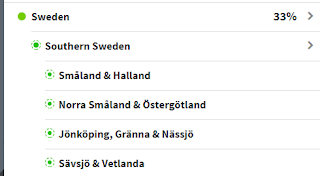
I am quite impressed, though, with Ancestry and their Swedish results. Look above as I have shown how Southern Sweden is shown by region. I have worked very hard to get most of my husband’s Swedish lines identified and they are from the area Ancestry identified. I’m looking forward to someday seeing a trend like this for my other ethnicities.
Ancestry has also released a section called StoryScout. It’s housed under DNA and includes information that you may have provided in a tree. I didn’t spend much time on this but I did take a look and it reminded me of something that is important to do and I honestly fail at it.
The section is based on census and military records from the 20th century. Sure, I’ve saved those records to my ancestors 20 plus years ago. I know where they lived, who they lived with, blah blah blah. What gave me pause, however, was that it correctly showed my maternal grandfather and noted that his income was nearly twice that of an average man at the time. He made $1400.00 per year when the average was in the mid $700.00’s. Wow. This explained to me why my immigrant family could afford a car in the 1920’s, a phone in the 1930’s, travel to California in the 1940’s and to Europe in the ’60’s. Now I understand why grandma, when babysitting me, would drag me to the nice stores and dress shops and had her hair done each week. Duh! They never flaunted their wealth and dutifully shipped supplies several times a year back to the old country. Thanks, Ancestry, for taking one small data point in the census and giving me an insight I hadn’t he thought about. Try it, it might work for you, too.
Sometimes, it takes a village to solve a genealogy mystery. Thanks to all for sharing their ideas regarding identifying my mystery man, Anton “Tony” Kos, who is buried next to my great grandfather Josip “Joseph” Kos in Gary, Indiana. An extra special thanks to research librarian Marilyn in Lake County, Indiana, who went above and beyond my request for Tony’s obit.
Since the rainy season has officially begun in Florida this morning, I’m planning on spending the weekend further researching Tony and Joseph’s relationship, if any.
Here’s some great ideas that genealogists recommended:
People did not always stay in one place for long. That’s especially true for laborers who went wherever work was available. Joseph arrived in New York, traveled to Detroit, Michigan where he got a job with the railroads, relocated to Pennsylvania and followed the lines to California and then back to Chicago, Illinois where he lived in Pullman housing with his wife and children he sent for years later. When the work ended in digging ditches, he moved to Gary, Indiana to work for U.S. Steel. My Tony could be anywhere in the US at any time.
Linda reminded me that immigration was not a one way route – people came and went across the pond. My grandparents ended up married because they crossed paths in Chicago. Grandpa Ivan “John” Kos was a second cousin to Joseph Kos. John emigrated with his brother, Stephen. Stephen had a wife and child remaining in Austria-Hungary and had come previously to work but returned to the old country. When money became tight again, he opted to return and brought John with him. When the railroad job ended in California, Stephen decided to return to Austria-Hungary while John took work in Chicago. This means that Tony may have moved back and forth, too.
Marilyn pointed out that people often relocated together. I know that’s a duh but rechecking immigration lists might be helpful in determining other’s with the same surname or surnames of related families I’ve previously identified. For example, when Joseph emigrated he came with a Franjs and Embro. Embro went with Joseph to Detroit while Franjs went to Pennsylvania. I’m not sure who Embro and Franjs were in relation to Joseph other than they were listed together and all came from Austria-Hungary in January 1910. Tracing Franjs and Embro may be beneficial in determining Joseph and Tony’s relationship.
City Directory dates are not the date the data was accumulated. Back in the day, the information for a City Directory was compiled by workers going door to door across the city. Then it was published, perhaps the following year. So the 1918 City Directory most likely had entries that were from 1917. Since there is no way to know the exact date when a particular entry was recorded, there’s no way to be certain in years between censuses when a family actually resided at the listed residence.
Sometimes the answer is not where you think so I may just need to broaden the search back to the old country. Unfortunately, Familysearch.org does not have the Roman Catholic parish records for the village by people came from so I may need to contact a genealogist in Croatia to shed light on the family.
Next week, I’ll be on the road so there will be no blog post. Happy Hunting!
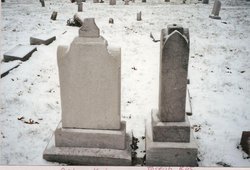
I’ve been researching a mystery man, Anton “Tony” Kos, who was buried in 1934 next to my great grandfather, Joseph Koss, in Oak Hill Cemetery in Gary, Indiana. You can see from the above pic I took in December 2001 how close the stones are compared to the next stone to the right. Looks to me like the plot was one.
I never got a straight answer regarding how Tony and Joseph are related, if at all. I’d love to find out if they were related, which I strongly think is possible, and why my mother and grandmother refused to verify that.
Here’s what I know…I used to accompany my mom and grandma to the family cemetery around Memorial Day to tend to the graves. We’d always go to the old part of the cemetery first, to clip the grass around the gravestone of my great grandfather, Joseph Kos[s] who died in 1919 during the Spanish flu pandemic. When I was old enough to read, I noticed that next to his grave was an Anton Kos. I knew the family name was originally spelled with one “s” but I had never heard of Anton so I asked how he was related and never got an answer. I recall my mother just looking at my grandmother and my grandmother looking down and continuing to tidy up her father’s grave. So, as only a small child will do, I asked again. I never got a straight answer. I tried several other times over the years and got various answers; that Kos is a very common Croatian name like Smith is in Great Britain. That didn’t tell me if Tony was related. It also didn’t explain why I never saw another grave in the cemetery with the original spelling of the surname. When I asked about that, I got, “I don’t know why.” as a response. (There actually is another Kos, John, who died in 1934 buried in the cemetery but as a child, I had never seen that grave.)
I tentatively placed Anton as a sibling of my great grandfather Joseph. Joseph was born in 1875 and Anton, in 1879. I had called the cemetery in 2012 to ask who purchased Anton’s plot and was told that no one did because the cemetery records don’t have an Anton Kos. I told the clerk I knew where he was buried, immediately south of my great grandfather. They insisted no one was buried there. Looking at the records, I understand what happened. Anton is listed as Tony in cemetery records, even though Anton is chiseled on his tombstone. Tony was what was recorded on his death certificate and the cemetery must have listed him under that name. My great grandfather’s tombstone has his Americanized name, Joseph Kos and not his birth name, Josip Kos so there was another possible clue that my family was involved. These folks Americanized as soon as they arrived in 1910.
As an adult, I can see another family trait that gives credence to a relationship; my family plans for their deaths. I could see that they would have purchased two plots when my great grandfather died in 1919 expecting that his wife would be buried next to him. But she lived on until 1966. I’m thinking when a family member who was in need of the plot died, the family buried him instead. My family always helped out a relative in need, be it sending care packages back across the pond, fronting them money or taking them into their home for awhile. My grandparents had purchased a larger plot in the newer section of the cemetery that was the intended burial site for them and my great grandmother. It is also where I buried my mother’s cremains.
After we tidied the old section (but we never touched Anton’s stone, which is interesting), we’d move to the new section to trim the grass around the Koss stone. No one was yet buried there but my forward thinking grandparents had enough sense to purchase the stone while they were still employed. (And thanks, mom, for taking care of your end of life stuff prior to your death. Hope our kids appreciate we did the same – yes, you can already find me on Find-A-Grave.)
So getting no where with the cemetery, I decided to try to research Anton Anthony Tony to find a connection.
From Ancestry.com, you can see his death certificate below:
No help with his parents info but it does say he was born in “Yugo Slavia” just like Joseph Koss. He also died of lung issues, just like Joseph. Joseph’s whole family had lung issues, hmm. Not a smoking gun but certainly gives one pause to consider a relationship as they all died young. He also was a laborer in a steel mill, though not the same one where Joseph worked. Granted, most immigrants at the time were laborers and steel mills offered good wages.
I have never been able to find Tony in any census – having checked 1920-1940 under Anton, Anthony and Tony Kos, Koss and Ross (as my own people have been enumerated as).
There is another mystery – who was Steve Sesta who provided the death certificate info? I’ve never heard of him.
The death certificate gives me a clue to look at the address where Tony was living when he died, 35 East 39th Street, Gary, Indiana.
So here’s a tip – I want to use the 1940 census to find who was living at Tony’s address. It could take quite some time using Ancestry.com because I would need to click on every enumeration area and Gary was a large city so there are many. To save time, I used the National Archives site (just Google 1940 U.S. Federal Census enumeration map and you’ll be taken directly to it or use my link).
Since I grew up in the city, I know the layout of the street and avenue names, which saved me time. If you are researching an area you aren’t familiar with, simply use Google earth to get a better idea. In my case, I knew that streets ran north and south, avenues ran east and west. Street names west of Broadway used the president’s names in order (Washington, Adams, Jefferson, no repeat of Adams, etc.) and east of Broadway used states’ names, in no particular order. So, I was looking for 39th Street and could eliminate all of the western side of Broadway simply by identifying if the first page of the census had a presidents name or not.
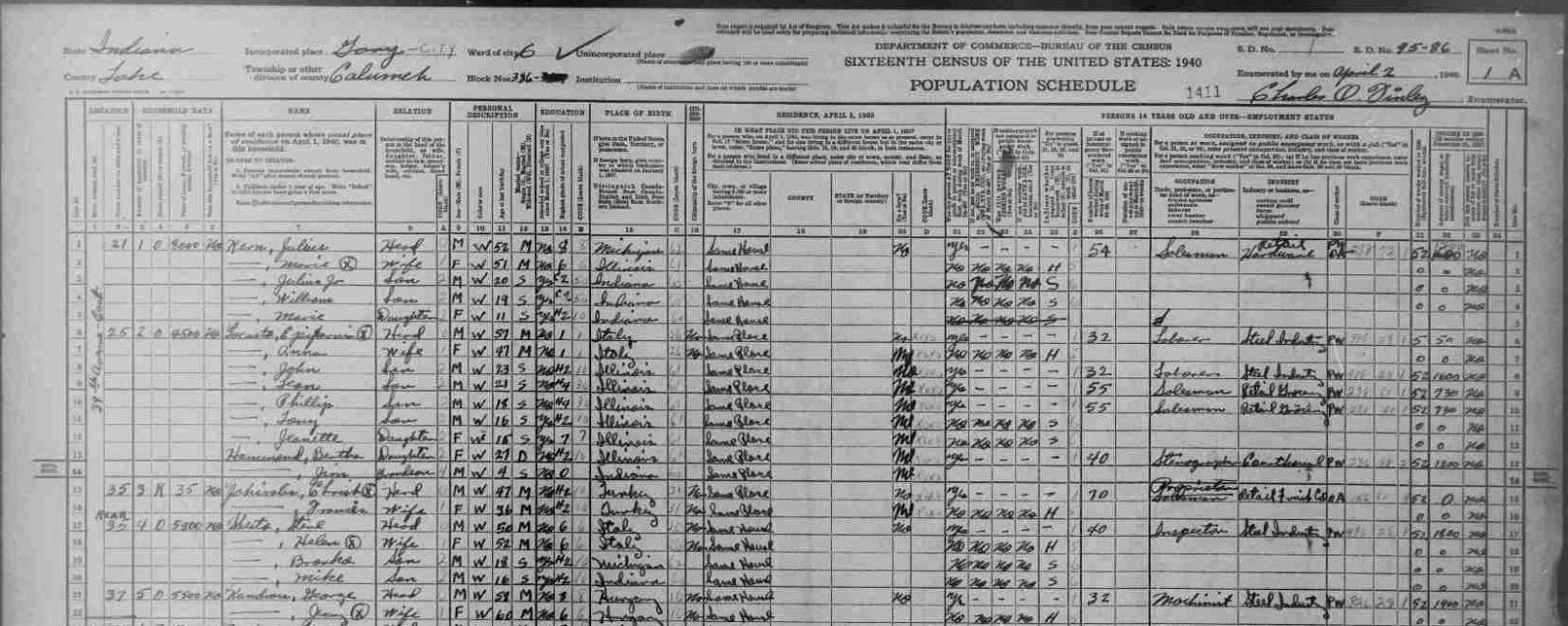
After going through 3 enumeration areas, I found the address:
The address was divided into two housing units, front and rear. Steve, who had provided the death certificate info, lived in the rear. That means Tony was living in the front but he wasn’t there in 1940. It also explains why there is no parent information for Tony, neighbor Steve did not know that information. (I know, you’re thinking I should check property records to see who owned the residence but the problem is most of Gary’s records were “lost” according to the Lake County, Indiana property appraiser’s office. I suspect they’re somewhere in Gary and just weren’t turned over to the county when the law changed but I don’t live anywhere close to be able to hunt around for them so that’s a dead end for me.)
The death certificate did state Tony had worked for 1 year as a laborer for Illinois Steel. He may have only arrived in the area in 1942, during World War II.
I checked immigration records but there are many Anton Kos’ who emigrated from Austria-Hungary/Yugoslavia so I’m unable to pinpoint one of them as my mystery man.
I know, from a recent DNA match with another relative, that during World War II, my Cvetkovic relatives were displaced to another part of what is now Croatia, due to mayhem in the area where the family originally resided in Velika Gorica. It certainly is possible that Tony had left the area because of the war and came to the U.S. to a place where family already resided.
Tony was survived by a wife, Anna, who was born in 1878. Perhaps she remarried as she is not listed in cemetery records by the last name Kos or Koss or like Tony, she wasn’t entered in the cemetery database correctly. Unfortunately, only 30% of the cemetery is listed on Find-A-Grave. There’s nothing on Billion Graves either.
Somehow, I have a maiden name for her as Smolkovic but I have no idea where I got that info. I also have a marriage date, but no place, and two children residing in Rhode Island. That info was obtained years ago before I carefully sourced (shame on me!). This is an area I need to further research.
I checked City Directories and there is only one Anthony in Gary but he was married to a Mary living on Filmore Street in Gary in 1918. He never appears in any other directory. My Kos line doesn’t arrive in Gary until 1919 so I suspect he wasn’t the my Tony. There is no Tony or Anton ever in any City Directory for Gary. I got his obituary thanks to the Ask-A-Librarian link on the Lake County library site but it provides basically no information other than he had died after a long illness, which disputes the information on the death certificate. Or, maybe not. Perhaps he suffered from lung problems for years but the incident that caused his death had been short.
There is no one in my family much older than me left who would know – definitely no one who was alive in 1943 that would remember. Decided I’d try the cemetery again since it’s recently been sold and maybe the new owners have done an inventory of grave sites. Sent an email on Sunday and haven’t gotten a response so will follow up with a phone call this week.
If that falls through, I’m going to attempt to check Baptism records for Velika Gorica to see if I can link Anton to Joseph’s parents. Unfortunately, they aren’t on Familysearch.org so I’ll have to email a genealogist in Croatia to do some digging.
Connecting Tony and Joseph would be awesome but I’ll most likely never get the story of why he was not discussed since dead men tell no tales!