The sun is out and the weather is cool so I intend to get some fresh air and complete yard work before the next deluge descends.
Think shelter in place lessens your genealogical connections? Think again! This is an awesome article that reminds us we need to sometimes not only think out of the box to discover our heritage, we often don’t need to look far at all!
The Washington Post’s article – Amid the pandemic, a family learns their neighbors are their long-lost relatives will make you smile, remind you that your family stories are often close but not always 100% accurate and the coincidences that occur while sleuthing can just boggle the mind. My immediate family has gotten used to my striking up conversations with strangers and discovering our families often had a shared past but this story takes it to a new level. Enjoy!
It’s been an interesting day in the Samuelson household which is the reason my blog is late. I don’t know about you but since we’ve been sheltering-in-place, we’ve had way too many broken devices. The odd thing is that most were under warranty and when those were being “serviced,” it resulted in another breakage. First it was the hot tub, then it was the refrigerator, and now it’s a yard that is a total disaster.
Before the world came to a stop, hubby and I had discussed having a well put in so that our garden could be watered more frequently in the dry season then our city permits. I had contacted a company who said they would be out the following week which turned out to be 6 weeks later. Now this wasn’t the fault of the company; in our area there are various environmental permits that must be acquired and the company couldn’t comply with the laws because none of the other organizations were opened. Finally, the permits were obtained and the well was supposed to be drilled yesterday.
My husband told the two service men to be careful because he thought there was buried cables where they planned to dig. I then showed them a photo from the last time we had the underground cable locators out showing exactly where the buried lines were. Did these two guys listen? Since you already know the answer, I’ll just continue…
Hubby was on a work related Zoom meeting and I was researching on FindMyPast when the internet connection was lost. We went outside and there were these two young men looking sullenly down at the broken cables. They had also cut the sprinkler line.
Thank goodness we were able to have the line restored this morning but then there was the matter of who was paying for the charge. The owner of the well company said he would take care of it but the connection wasn’t a simple one and now someone else is going to have to come out to bury cable and get it under our driveway. And dig up the whole front of our yard to bury the new line.
In the meantime, while the well company was trying to fix the broken sprinkler line, a torrential downpour occurred. They left in a hurry with the job undone. Hubby, who had been trying to help them, came in drenched and cold. I ordered him to the shower and that’s when we realized they had the water turned off. So, out we go in the downpour to turn the water back on. Then we noticed that something was amiss – we just didn’t have the pressure we had previously had. After the storm subsided we went back outside and discovered the company had left the sprinkler on and it had been coming out full force for two hours. This resulted in flooding on that side of the house. Yeah, it’s been a day! But we do have internet!!!
So, being homebound with no access to the outside world I decided I would catch up on my reading. I am happy to report I’ve read my back issues of Smithsonian, National Geo, AAA and various journals. My favorite, though, was the winter issue of American Ancestors. The entire magazine is devoted to the 400th anniversary of the Mayflower. Even if you aren’t a Mayflower descendant, this is a must read.
My favorite articles were “We are still here,” a Wampanoag perspective, “Keeping Tradition Alive, A Portrayal of Wampanoag Life,” “New Discoveries in Mayflower Genealogy Uncovering Connections through DNA,” “Finding Unexpected Mayflower Kinships,” and “Ideas for Future Mayflower Research.”
The last three articles provide hints for anyone who is trying to locate records from the time period, even if you don’t have a Mayflower connection. Checking manorial records, registers, and recusancy (a record of nonconformists who refused to attend Church of England services) are excellent sources to use to hunt down your elusive ancestors. I had used the recusancy records years ago when researching some of my Quaker ancestors but had forgotten about that tool. I plan to check it out again as I search for one of my Hollingshead family members who had left merry ole England for New Jersey by way of Barbados.
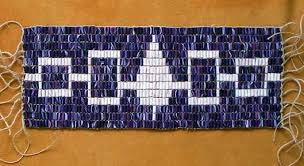
The first two articles, from a Native American perspective, were clearly the best of the bunch. I learned so much and what sticks in my mind most is the original reason for wampum belts. If you thought, as I had, they were currency, well, you just have to read the article. I was blown away by truth. (Hint: read page 27!) I was aware of Native American’s culture that honors the elderly and ancestors but I had no idea the artistry in the remembrances that was involved. The deep symbolism in a wampum belt will remain with me forever.
Run out of your regular go-to’s for genealogy research? You are in luck because some free offerings are now available to get you out of your rut:
British History Online is a digital collection of Great Britain, Ireland and more that will be free through July. Currently I’m using it to research the Caribbean (West Indies) but colonial U.S. information is also available. I discovered one of my distant family members was interested in the East Indies in the 1500’s – who knew?! Check out this blog before you get started.
Legacy Family Tree Webinars is offering a free webinar from their extensive library each day in April. If you aren’t a member, now is a wonderful time to take a look at what they have to offer.
With libraries closed throughout the world, why not go to your local or state genealogy association’s home page and see if they are still offering meetings from the comfort of your own home. My local group has switched to using Go To Meetings for their weekly tech meetings. Yours may be using Zoom or Microsoft Office Teams. They’re easy to use and if you’re new here’s a few hints. For Zoom, you can click on the upper right of the screen and change the view of attendees from a bar across the top to a grid that will take up the entire screen (like the old Brady Bunch). Wondering why some people have a black square and no picture? They clicked the video button the bottom of their screen to disable their computer’s camera. The host (the person who sent the invitation link or password info) has the ability to let everyone speak or to mute and then unmute attendees. You can mute yourself on the same bottom bar if you like. Want to ask a question but not interrupt? Just click the message on the bottom bar and a side bar will appear. Type whatever you like and click enter. Your message will appear and the host will hopefully get around to answering it. When you’re done, just click the red “Leave Meeting” button and you’ve disconnected from the site.
Although this is not directly related to genealogy, it will most definitely help you if you don’t already have Microsoft Office. Check out this link for details, restricts do apply.
Last week my blog was a whole lot longer than usual but I figured now that you’re housebound, you’ve got time to read. I have seven additional ideas to work on since you can’t run down to your local archive or call a library to access a record. Now is a wonderful opportunity to…
1. Review what you have on that brick wall ancestor. Take every scrap of evidence and spread it out on your workspace. Now arrange it in chronological order and study it. Next arrange it by connections, such as every document that has the spouse’s name, too. Do you see any missing time frames? Maybe there was a marriage certificate for 1842, a deed in the same county for 1852 but one of the individuals isn’t mentioned in the 1860 U.S. Federal census but shows up again in 1870. That’s a clue to figure out where the individual was in 1860 – maybe they were ill and placed in a sanitarium, perhaps they were visiting an adult child in another area, the person may have had to find work elsewhere or attend the funeral of a family member. Not sure where the person might have been? I recommend reading my last blog article and doing item 3. After you do that …
2. Take your time to synthesize the information. Don’t rush – we aren’t going anywhere for awhile. Let the information just percolate in your brain. Write down what you find odd or missing. Now it’s time to…
3. Do some exercise. Hubby and I now start our day with a beginner yoga video we found on youtube. Stretching and breathing will help your brain process the information so give it a try. The workout may have made you hungry so now think about…
4. Family recipes. My hubby’s birthday is coming up and I may have to dig up the family Depression Cake recipe because I don’t know what ingredients will be available at the grocery. That recipe makes me think of other recipes that got my family through difficult times. When my grandparents were quarantined with their young family because of a scarlet fever outbreak, she practiced social distancing by speaking with her neighbors through their open windows. Reminds me of the people singing together on the balconies in Italy or exercising in Spain. In my family’s case, grandma got a great spaghetti sauce recipe from the Italian neighbor and what we call corn meal mush, from the southern neighbor on the other side of her home. That was nearly 100 years ago. Think about the legacy you’re leaving your descendants…
5. Write down your experiences. I realize how spoiled and privileged we are. I miss going to restaurants the most. I only recall both sets of my grandparents going to a restaurant once. My maternal grandparents, my mother and I went with a neighbor to the Beach Café in Miller, Indiana when I was about 6 years old to get perch on a Friday night during Lent. Mr. Bauer had just become a widow and missed going to the café with his wife so my family joined him. I didn’t know then that he had been a character witness 20 years earlier for my grandparents so they could become citizens. My paternal grandparents, my parents and I went to a diner in Hobart, Indiana when I was about 3 years old. I have no idea why we only went once or why we went there but I recall there were other people with us so I suspect visiting relatives must have come to town. They ordered a large pizza and to me, it looked disgusting so I refused to eat it. I ended up getting the chicken drumstick child’s dinner. My dad bought me a plastic rocket that came apart in three pieces – it was the Cold War and we were going to beat those Russians. That was 60 years ago. Those are my memories of dining out – now write yours and if you get stuck…
6. Ask an older relative about their recollections. Now is the time to connect so give them a call, email, Skype or even write a snail mail letter. I wish I had thought to ask my grandparents about the 1919 Influenza pandemic. I know my grandfather and great grandfather both got it in January; my grandmother blamed their resistance being shot to working the night shift at U.S. Steel and riding their bikes home in the cold rain. My grandfather got over it quickly; my great grandfather died. He had been known to have asthma and epilepsy and the flu turned into pneumonia. I have the funeral photo with no social distancing practiced. I know how the family coped – my grandmother took in borders to help pay the bills now that half the money was gone. What I don’t know is how they prepared for the epidemic. Perhaps they never did. The family raised chickens and rabbits and canned their garden vegetables. I really wish I had asked more questions. If you aren’t able to connect with an older generation because you are the older generation then…
7. Reach out to those your DNA says are family. Sure, you tried that before but they didn’t respond. Well, try, try again because they’re probably home now, too, and just might have time to respond to you.
Remember, Shakespeare and Newton did their best work during a pandemic. Keep up your spirits by thinking about how your ancestors handled adversity. Let them serve as a model for you.
Like the rest of the world, my Spring Break plans have come undone. Flexibility is a great trait for genealogists so I’m looking at this bump in the road as a way to help me grow. Seriously! Stick with me and I’ll give you some ideas.
First, I’d like to apologize for my last blog being posted late. I didn’t realize until Wednesday it hadn’t been published. Typically, I write on Saturday mornings and post immediately. The week prior, I thought I would be working on Saturday so I wrote two blogs with the intent of publishing the second before I left for work the next weekend. Except, my weekend gig was cancelled. I decided Saturday to alter my routine. After the crazy week of trying to wrap up client requests in the event that my local archives closed (and they have) and making plans to relocate my educational job to home (which also came to be), along with trying to prepare our home for shelter in place, I decided to take Saturday to spend outdoors all day. Our yard looks fantastic! On Sunday, fired up by all we had accomplished the day before, I got the brilliant idea to clean the garage which consumed most of the day. Then Monday, what should have been the start of my spring break, I spent posting to groups on my school district’s platform to reach out to parents and students. That took up most of Monday and Tuesday. By Wednesday, I was in a routine for our new normal and was ready to pick back up with genealogy.
My advice if, like me, you’re stuck at home – DO NOT SIT ALL DAY IN FRONT OF YOUR COMPUTER! You will get lulled into a stupor, miss clues and follow a path down a rabbit hole that won’t help you find what you’re seeking. Instead, this is a wonderful opportunity to reflect on your practice and do the things that you’ve been meaning to do but put off. Here’s some ideas:
1. Clean your work area. You might uncover a note to self of a document you wanted to investigate, an email you wanted to send or copies of research you meant to review but didn’t get around to it. I found some great ideas for future blog posts which leads me to recommending…
2. Start your own blog. It’s easy, it’s fun to connect to others who are as passionate as you are and it can be free. I post in two places – Google’s Blogger and on my own website (which I do pay to maintain). Not sure what to write about? Whatever you’re interested in is fine. You’d be surprised at how many far-flung family members will find you if you post about a surname, especially an uncommon one. The thought of surnames leads me to realize…
3. We aren’t the only generation that’s experienced working from home. I bet, like me, you have a sizeable number of ancestors who were farmers. They lived on the place they worked. My husband’s side had a number of mariners who lived on their boats and retailers who lived above their stores. I’ve also had tavernkeepers who lived on site. Travel, back in the day, was often difficult which explains why deeds weren’t presented in a timely manner, obits weren’t noticed in the nearest city’s newspaper and children learned at home. If you’re getting claustrophobic, take your electronic device outside, Google a location, select “more” from the ribbon and click “Books.” Now pick an old book from your selected location and read about what life was like when your ancestor was homebound. Highlight or take notes on anything that gives you an idea for further research. Some ideas are the name of the church denomination that was there in 1809, the old cemetery that isn’t listed on Find-A-Grave or Billion Graves, or where the courthouse was located. You can email the local genealogy society for more information on where those records may be housed and then take that info and turn it into a…
4. Research Question. This is a wonderful opportunity to up your genealogy practices and truly write down what you want answered. Every genealogy software program has somewhere you can record your question, be it notes or comments. I sometimes even use stickees to keep me on track. Post it right on your screen to stay focused. Research shows that we need to give our brains a break from intense focusing so…
5. Get up and move for a bit. Walk around your house and put labels on the bottom of family heirlooms. Sure, you know who owned what but that doesn’t mean your descendants will remember. Stand and sort that pile of papers you meant to file or reorganize your files entirely. I like sorting by surname and then alphabetically by first name but whatever works for you is fine. Now stand and scan the info, saving to your external hard drive, cloud or other device. Wow, you just got some exercise, rested your brain and accomplished a task you’ve been putting off for awhile. Good for you! Part 2 with more ideas coming soon.
You may have tried the new MyHeritage tool that allows you to upload a black and white photo that will be transformed into color. I spoke with a colleague at a genealogy conference last month who gushed about the magic of the results.
I finally got around to trying it and decided the true test would be with one of the photos in my collection that were of a known relative so I could compare results with memory.
I selected a photo of my great grandmother, Anna Grdenic Kos[s]:
I recall this photo was taken Christmas 1961 or 1962. I remember the dress and that my grandmother, Mary Violet Kos Koss, purchased the corsage and it was worn to the church service. I even recall where they attended, St. Joseph’s Croatian [Roman] Catholic Church in Glen Park, Gary, Lake, Indiana. I didn’t go with them because the mass was in Croatian; instead, my mother and I walked a block to attend services at St. Mark’s [Roman] Catholic Church.
Here’s what the colorization looks like:
This was not my great grandmother’s skin tone in winter; she was quiet pale. Actually, it wasn’t even her tone in the summer as she didn’t go out in the sun. The dress was green and white. The corsage was silver with red balls and a green ribbon. I know this because I was there. I also played with the corsage and tried to affix it to my cat’s collar after the holidays. I thought that corsage was just awesome!
So, if you’d like to colorize your photos you can do so at MyHeritage. You can sign in through Google or Facebook and if you have a MyHeritage account, just enter your password. Then, just drop and drag the photo you’d like colorized in the box. It just takes a few seconds to get the finished image.
Know that MyHeritage retains the rights to the photo. Know, from my personal experience, the colors you get aren’t necessary true. Personally, I like my black and whites and sepias.
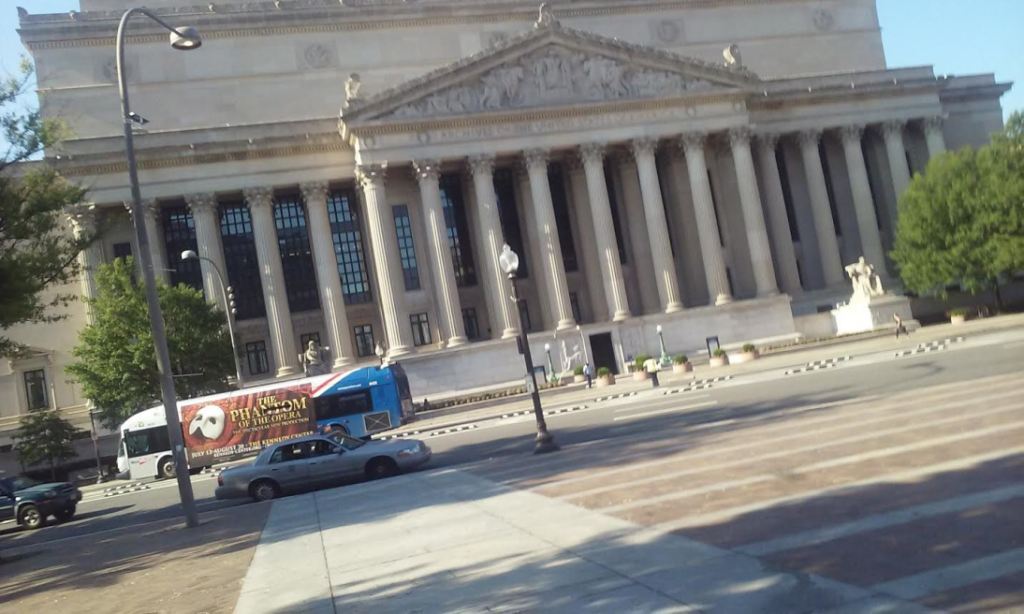
National Archives Researcher Entrance from the Metro steps
I love researching at NARA! Sure, some of the records are available online but holding that original document in my hands and knowing that my ancestor once touched it is a feeling like no other. The staff has always been accommodating and when I get all teary eyed when I’ve made a new discovery, many have patiently listened and shared in my joy.
It’s time for us to step up and see to it that the agency gets the funding they need to continue to do the job for us. The tentative budget provides less than the amount allocated in 2010 yet the demands for archiving have risen. We must contact our Congressional representative by Tuesday, March 11th, to make them aware of the importance of adequate funding.
Dear Readers, I’ve only asked you once before to contact your representatives when the 500% proposal to raise the fee by the U.S. Citizenship & Immigration Service in December was announced. I try very hard to not be political in my blogs. I don’t care what side of the aisle you’re on. I do care that you are able to access the records you need. I do believe records need to be preserved for future generations. I hope you see the value in getting NARA the funding it needs to do the job correctly. All it takes is 5 minutes from you to call your Congressional rep at 202-224-3121 or send an email. The few minutes from your busy day to make your wishes known might just result in your brick wall break through down the road.
Need more info? You can read about the budget needs here.
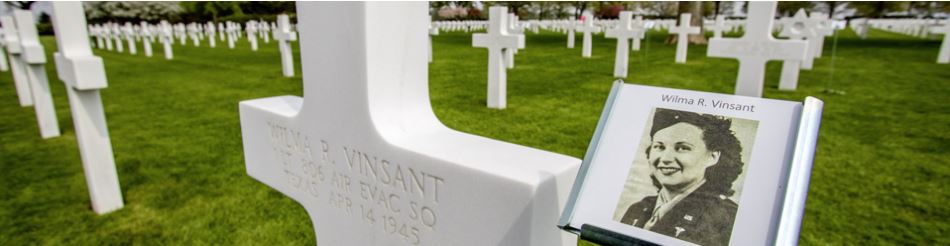
Just 75 years ago this spring, WW2 came to a close. The Faces of Margraten project, spearheaded by the nonprofit Fields of Honor Database in the Netherlands, is attempting to locate 7500 photos of U.S. service personnel who sacrificed their lives to end the conflict. Between May 2-6, 2020, at the American War Cemetery and Memorial in Margraten, the photos will be displayed at the gravesite or the Memorial Wall for those who were missing in action.
As of today, the organization is only 180 photos short of their goal. Do you know of a family or community member who was interred in Margraten? If so, you can send a photo of the deceased to info@degezichtenvanmargraten.nl.
I became involved last summer when I received an email from the organization inquiring about a distant relative found in my Ancestry.com tree. I didn’t have a photo but after checking out the organization, decided I needed to help. All it took was an email to the hometown library and a request to check a local newspaper for a photo in the obituary. The following day, I received the photo which I forwarded to the Fields of Honor Database. I then tried to find photos for the Indiana soldiers. I was able to find 21. I don’t live anywhere near Indiana but I remember my high school had a memorial to the alumni who were killed in combat. That memory made me want to help find the Indiana folks. One of those 21 photos happened to be an alumni of my alma mater.
Want to help but not sure how? First, go to the Fields of Honor Database then click on an alphabet letter. For example, I clicked on “A” and then the first entry, AARON, John D. If you see the following:
then a photo is needed. To find a photo I use the same genealogy skills I would to find information about any ancestor I’m researching. Here’s the steps I would take:
1. Review what is known – From the memorial page I see that John D. Aaron was born in Chismville, Logan, Arkansas and he enlisted in Kansas in 1943. He was killed 27 Nov 1944 near Barmen, Germany.
2. Look in the obvious places first (in alpha order) – Ancestry, BillionGraves, FamilySearch, Find-a-Grave, Fold3, MyHeritage, etc. to get more info. I like to start with the 1940 US Federal census because I can get an age and education level for the soldier and discover where he/she lived (1935) prior to enlistment. Why? So I can look at year book photos.
This is what I find for John D. Aaron using Ancestry:
I’m going to check out the third entry because it’s a close match name, age, and places – born in Arkansas but living in Oklahoma. That record is a little disappointing:
1940 U.S. Federal Census, Bristow, Creek, Oklahoma, population schedule, p. 5A (handwritten), line 39, John D. Aaron; digital image, Ancestry.com (http://www.ancestry.com: 29 Feb 2020); citing NARA microfilm publications m-t0627-03288. b
because John only went to grade 6, meaning no picture in a high school year book.
If a year book photo is not available, I check out the online family trees for the individual. On Ancestry, he’s found in 23 family trees. If you find a photo, contact the poster for permission to use and then send to the project. If there is no photo but you find a tree naming the individual, contact the owner to ask if they have a photo and explain why you’d like one. But don’t stop there, we all know it can be YEARS before someone will respond to your query.
Interestingly, the first tree I went to on Ancestry has an obit. When I go to Gallery to get the citation, I find a note from the family member who provides his email address with a note that he is looking for a photo to be included in the Faces of Margraten project. Small world! Since I know someone is actively searching for this photo, I’d go back to step 1 and pick another individual to research.
3. Ramp up your search by contacting a local library, genealogy organization, hometown newspaper or high school. Briefly email the organization what you know and why your searching for a photo. Sometimes newspapers put the photos in a special section, other times with the obituaries. Besides newspapers and year books, photos have been located in library clipping files and family donated materials. The local staff can help direct you to another archive if necessary. I’ve even had small town libraries tell me that they know of family members who still reside in the area and they’ve reached out to them for a photo. Isn’t that heartwarming?!
My biggest learning experience with this project was that the American Gold Star Mothers organization, founded in 1928, does not have an archive containing soldier information. That’s a shame since many of the U.S. government records were destroyed in the 1973 fire in St. Louis. Makes me appreciate the Netherlands organization even more for memorializing the fallen.
Now it’s your turn to pitch in and find a photo. I’d love to hear of your success; leave a comment or email me at GenealogyAtHeart@gmail.com with your soldier’s name and how you made the discovery.
Every conference is a learning experience and today was no exception. My local genealogy society sponsored four presentations by Dr. Thomas Jones, PhD, CG, FASG, FUGA and one break out session by a local genealogist.
I’ve lost count of how many in person and online presentations I’ve attended given by Tom. In every one, he always makes the most difficult scenarios seem easy to resolve. I enjoying following his logic in drawing a conclusion based on the records he has or has not found.
The program today started with the beginner level, progressed quickly and then ended with an upbeat – you can (and should) do this approach. Here’s my four biggest take aways that can help your research:
Tom lamented that he wasted nearly 20 years at the beginning of his family history career by not reading genealogical journals. I made the exact same mistake. If you’re a newbie, you will benefit from reading articles published by the National Genealogical Society, The American Genealogist, New York Genealogical and Biographical Society, New England Historic and Genealogical Society, your state societies and more. No, the articles probably aren’t going to help you name your brick wall ancestor but they will provide the tools that others used to discover what you’re having difficulty locating. No excuse if being a member of all of these societies aren’t in your budget; your local public library probably has a subscription. If not, ask for a year’s membership as a birthday gift. Find a friend interested in genealogy and each of you become a member of one and share the journals. Post on Craig’s List or go on eBay and search if someone is selling their collection. I’m trying to be a good environmental steward so I’ve stopped getting hard copies in the mail and read the articles online. When I did get the paper version, I always donated to my local library when I was done. Pass yours on, too!
Tom reminded us to “consider everything and trust nothing.” Personally, I think that’s good advice not just for genealogy. He was referring to online family trees and in print family genealogies. It’s not too difficult to tell which are well researched. It is a must to check out the citations to confirm the accuracy.
“Inconvenience is not a reason for drawing a conclusion; get as close as you can to original records.” I’m blending Tom’s quote with the breakout session I attended on England and Wales records. I do some, but not a whole lot, of English and Welsh research. I wasn’t aware that the British equivalent to the U.S. National Archives has only 5% of their records online. I don’t know what the latest percentage estimates are for U.S. records but whatever the amount, not everything is available from the comfort of your home computer. True, it’s not always convenient to have to do boots on the ground but it is necessary.
“Gather the stories you’ve been told, write them down and share them.” Definite words of wisdom! For my long time readers, you know that was one of the reasons why I started blogging. I wanted a place to connect with my far flung relatives by sharing the stories passed down to me by my maternal grandmother. Every family has heartwarming tales and whispered lore. Write it down, check it out and pass it on before it’s been forgotten. Your descendants will be so thankful you did!
Last, as promised, here’s a shout out to one of my New Port Richey followers that happened to be in line in front of me today. It was awesome meeting you in person. Happy Hunting!
Last week I blogged about obtaining school records to help identify parentage. This week I’m thinking in reverse; say I know the parents names but I don’t know the children’s names. Where to look if census records aren’t available? Try church records.
Now wait, before you stop reading because you don’t know if the family was affiliated with a church, I’m going to tell you some tricks to discover that information.
First look at the marriage license to see if there was a minister named. You might get lucky and the church address was also recorded. In that case, see if the church is still the same denomination and contact them.
If you aren’t able to identify a church, then take the minister’s name and try to identify his religious affiliation from the previous census. When researching a local family, I was able to look at the 1945 Florida State census to find the minister and his address. Using property records, I could tell the denomination of the church he was affiliated with then – it was Baptist. The marriage record from 1946 was in Tampa so it was probable that the family had married in that particular Baptist church. They had records and I was able to confirm the marriage occurred at that site and several children, named, were inducted in the Cradle Club.
This works, too, even if you’re looking for much older records for an elusive family. If this was in the time of circuit riders, do a Google search to see if the minister named on the marriage license denomination shows up, then identify where those records may have been kept. For example, I’m always interested in finding information about my Duer family living in what is now Ohio. I was able to determine they were Presbyterian (after leaving the Quaker denomination). I know where the circuit rider records are kept but they are not yet digitized or indexed so someday I’ll be visiting the repository to check them out.
I’ve blogged in the past about obtaining a transcription of a diary written by one of my husband’s 3rd great aunts (yes, I extend searches to distant family – you never know what you’ll find and it’s usually awesome). Mary Ann Eyster Johnson died in 1905 and descendant’s of her husband (they had no children) donated her diary to her rural church in St. Joseph County, Indiana. While researching Mary Ann’s sister, Sara, in the hopes of identifying all of their children, I located Mary Ann’s diary and happily found she had recorded all of Sara’s children’s birth dates and in most cases, times. This was long before birth certificates were available.
My recommendation is always check out church records and if possible, go in person and bring chocolate. It’s always worked for me!